
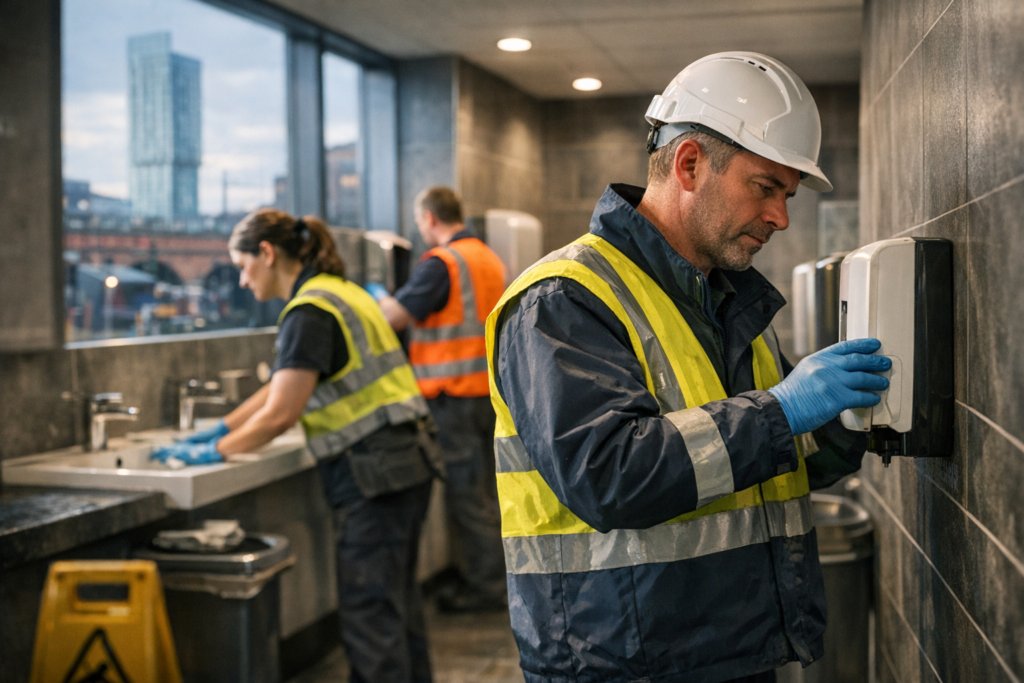
Washroom services Manchester are a critical yet often underappreciated component of facilities management for UK businesses. Maintaining high standards of washroom hygiene UK-wide is essential not only for compliance but also for safeguarding employee wellbeing, upholding corporate reputation, and ensuring operational continuity. This article explores the significance of washroom hygiene services in Manchester, encompassing regulatory frameworks, practical benefits, and strategic considerations for commercial property managers, operations leaders, and compliance officers.
Understanding Washroom Hygiene Services: Definitions and Relevance
Washroom hygiene services refer to the comprehensive range of cleaning, maintenance, and sanitary provisions designed to keep restrooms safe, clean, and compliant with UK health regulations. These services typically include cleaning services Manchester-based, sanitary waste disposal, feminine hygiene services, washroom maintenance UK-wide, and sometimes integrated restroom services Manchester providers offer to ensure seamless workplace hygiene solutions.
In a commercial context, washroom hygiene is more than a housekeeping task; it directly impacts workplace health and safety, employee satisfaction, and regulatory compliance. The presence of clean, well-maintained washrooms can reduce the transmission of infectious diseases, align with health and safety mandates, and contribute to a positive business environment.
The UK Industry and Compliance Landscape for Washroom Hygiene
Regulatory Frameworks Governing Washroom Hygiene
UK businesses must navigate a complex compliance landscape to maintain washroom hygiene standards effectively. Key regulations and standards include:
- Health and Safety at Work Act 1974: Mandates employers to ensure the health, safety, and welfare of employees, explicitly including the provision and maintenance of adequate sanitary facilities.
- Workplace (Health, Safety and Welfare) Regulations 1992: Require employers to provide sufficient, clean, and accessible washroom facilities.
- Control of Substances Hazardous to Health (COSHH) Regulations 2002: Govern the safe handling and use of cleaning chemicals within washroom services.
- Duty of Care under Waste Regulations 2011: Obligates businesses to responsibly manage sanitary waste, including feminine hygiene products, to prevent environmental contamination.
- British Institute of Cleaning Science (BICSc) Standards: Provide best practice guidelines for professional cleaning services, including washroom hygiene.
Operational Challenges for UK Businesses
- Ensuring consistent hygiene standards across multiple sites.
- Managing the disposal of sanitary waste in compliance with environmental protection laws.
- Training cleaning staff in COSHH and safe chemical use.
- Balancing planned vs reactive washroom maintenance to avoid operational disruption.
- Integrating washroom hygiene with broader facilities management and security services.
Core Benefits of Washroom Hygiene Services in Manchester
Health and Safety Risk Reduction
Effective washroom hygiene mitigates the risk of infection and illness in the workplace. Clean restroom services Manchester facilities reduce microbial contamination, helping prevent outbreaks of diseases such as norovirus or influenza.
Compliance Assurance
Adherence to UK hygiene compliance standards protects businesses from legal penalties and reputational damage. Regular washroom maintenance UK providers deliver supports audit readiness and regulatory inspections.
Operational Continuity
Reliable washroom services prevent facility downtime caused by equipment failure, blockages, or unsanitary conditions, ensuring uninterrupted business operations.
Cost Efficiency
Proactive hygiene management reduces long-term costs related to deep cleaning, repairs, and potential litigation from hygiene-related workplace incidents.
Use Cases Across Industries
| Industry | Specific Requirements | Washroom Services Manchester Solutions |
|---|---|---|
| Retail | High footfall demands frequent cleaning and restocking | Scheduled washroom maintenance and rapid response cleaning |
| Construction | Compliance with COSHH and onsite hygiene challenges | Mobile washroom units with waste management services |
| Corporate | Employee wellbeing and ESG commitments | Integrated workplace hygiene solutions with reporting |
| Healthcare | Strict infection control and feminine hygiene support | Specialist sanitary services Manchester for clinical sites |
| Hospitality | Customer-facing washrooms with high standards | Enhanced cleaning services and feminine hygiene provisions |
Operational Workflows for Washroom Hygiene Services
A structured approach to washroom hygiene typically includes the following steps:
- Assessment: Site surveys to identify facility needs and compliance gaps.
- Planning: Customized hygiene schedules aligned with footfall and usage.
- Service Delivery: Cleaning, restocking, feminine hygiene services, and maintenance.
- Waste Management: Safe disposal of sanitary and general waste per Duty of Care regulations.
- Monitoring and Reporting: Routine audits and digital reporting for transparency and continuous improvement.
Challenges & Mitigation Strategies
| Challenge | Mitigation Strategy |
|---|---|
| Inconsistent hygiene standards | Implement standard operating procedures and staff training |
| Chemical safety compliance | COSHH training and use of eco-friendly cleaning agents |
| Waste disposal compliance | Partner with licensed waste carriers and follow Duty of Care |
| Cost pressures | Use planned maintenance to avoid costly reactive fixes |
| Staff turnover affecting quality | Ongoing training and certification (e.g., BICSc) |
How to Choose the Right Washroom Hygiene Service Provider
Key Evaluation Criteria
- Industry Certifications: Look for providers accredited under BICSc, ISO 9001, and those holding SIA licenses if security-integrated.
- Experience and Scalability: Capability to service single sites or multi-location portfolios.
- Technology and Reporting: Use of digital platforms for service tracking, compliance reporting, and customer feedback.
- Environmental Responsibility: Commitment to sustainable cleaning products and waste management.
Operational and Compliance Considerations
- Ensure staff are trained in health and safety, COSHH, and hygiene compliance UK standards.
- Confirm data protection protocols if service technologies involve personal data.
- Validate environmental compliance under the Environmental Protection Act and Waste Regulations.
Common Misconceptions About Washroom Hygiene Services
-
Myth: Washroom cleaning is a low-skill task.
Reality: Professional washroom services require trained staff knowledgeable in hygiene compliance and chemical safety. -
Myth: Reactive cleaning is sufficient for hygiene.
Reality: Planned maintenance prevents outbreaks and costly disruptions. -
Myth: Environmental compliance is optional.
Reality: Duty of Care and waste legislation impose legal obligations on sanitary waste management.
Frequently Asked Questions (FAQs)
What are washroom services Manchester businesses should expect?
Washroom services include cleaning, restocking consumables, sanitary waste disposal, feminine hygiene services, and routine maintenance to ensure compliance and hygiene standards.
Why is washroom hygiene important for UK workplaces?
It reduces health risks, ensures regulatory compliance under the Health & Safety at Work Act, and maintains a professional business environment.
How often should washroom services be conducted?
Frequency depends on facility usage but typically ranges from multiple daily cleanings in high-traffic areas to scheduled weekly maintenance in lower-use sites.
Are feminine hygiene services included in washroom hygiene?
Yes, these services provide disposal units and products to support workplace inclusivity and hygiene compliance.
What certifications should a washroom hygiene provider have?
Look for BICSc accreditation, ISO standards, and, if combined with security, SIA licensing.
How does washroom maintenance impact cost efficiency?
Regular maintenance reduces emergency repairs and extends the lifespan of fixtures, lowering overall operational costs.
What emerging trends affect washroom hygiene in the UK?
The adoption of AI-enabled monitoring, automated cleaning technologies, and integrated facilities management models focused on sustainability and ESG compliance.
Emerging Trends in UK Facilities and Security Industry Impacting Washroom Hygiene
- Technology Adoption: Smart sensors and AI-powered monitoring enable real-time cleanliness tracking and predictive maintenance.
- Integrated Service Models: Combining cleaning, security, and property maintenance enhances operational efficiency and compliance oversight.
- Sustainability & ESG: Increasing demand for eco-friendly hygiene products and responsible waste management aligns with corporate social responsibility goals.
Conclusion
Washroom services Manchester businesses implement are foundational to maintaining workplace hygiene, safeguarding health, and ensuring compliance with UK regulations. Understanding the operational workflows, regulatory landscape, and strategic benefits allows facility managers and business leaders to make informed decisions. By selecting providers with appropriate certifications, robust operational capabilities, and a commitment to environmental responsibility, organisations can enhance workplace wellbeing and operational resilience. Maintaining high standards in washroom hygiene is not merely a maintenance task, but a strategic imperative that supports compliance, employee satisfaction, and cost-effective facility management.
For more insights on integrated facilities management, security, and property services aligned with UK compliance standards, explore related topics such as Security Services, Facilities Management, Cleaning Services, and Property Maintenance.