
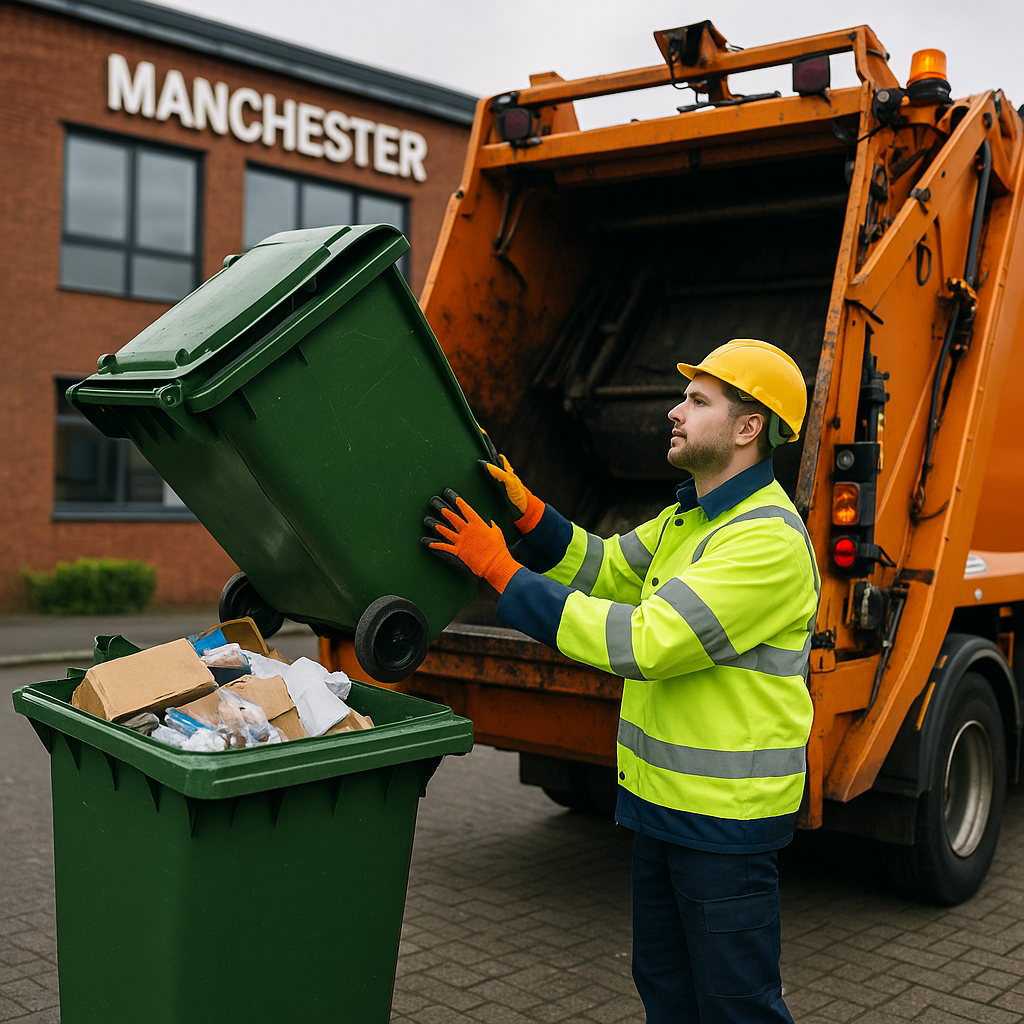
Waste management Manchester plays a crucial role in helping businesses across the city maintain compliance with UK waste regulations. Effective waste disposal and recycling are not only environmental responsibilities but also legal obligations under UK law. This article explores how waste management services support businesses in Manchester to navigate these requirements, ensuring operational continuity and regulatory adherence.
Understanding Waste Management in Manchester
Waste management encompasses the collection, transport, processing, recycling, and disposal of waste materials. For businesses in Manchester, managing waste efficiently is essential to meet the Duty of Care under the Environmental Protection Act 1990 and Waste Regulations 2011.
What Is Waste Compliance UK?
Waste compliance UK refers to adherence to the legal frameworks governing waste handling, including segregation, storage, documentation, and disposal. Businesses must ensure that their waste management practices prevent environmental harm and reduce landfill usage.
Why Is Recycling Manchester Important?
Recycling services in Manchester help businesses divert waste from landfill, supporting sustainability goals and compliance with local and national environmental policies. Proper recycling also reduces disposal costs and promotes corporate social responsibility.
UK Industry and Compliance Landscape for Waste Management
UK businesses face stringent regulations designed to minimise environmental impact:
- Duty of Care (Waste Regulations 2011): Requires businesses to manage waste responsibly, keep waste transfer notes, and use licensed waste carriers.
- Environmental Protection Act 1990: Sets out offences related to fly-tipping, illegal dumping, and improper waste disposal.
- Health & Safety at Work Act 1974: Ensures waste handling does not compromise employee safety.
Non-compliance risks include fines, legal action, and reputational damage. Facilities managers and compliance officers must understand these frameworks to mitigate operational risks.
Benefits of Professional Waste Management Services in Manchester
- Regulatory Compliance: Expert services ensure all waste is handled according to UK law, maintaining accurate records and certifications.
- Risk Reduction: Proper storage and disposal reduce hazards such as contamination, pest infestations, and workplace injuries.
- Cost Efficiency: Streamlined waste processes and recycling reduce disposal fees and potential penalties.
- Environmental Impact: Enhances corporate sustainability through recycling and waste minimisation initiatives.
Use Cases Across Industries
| Industry | Waste Management Needs | Benefits from Services |
|---|---|---|
| Retail | Packaging waste, food waste, cardboard recycling | Efficient segregation, recycling, cost savings |
| Construction | Hazardous waste, debris, packaging | Safe disposal, compliance with COSHH |
| Corporate | Office waste, confidential shredding, electronics | Data protection compliance, recycling |
| Healthcare | Clinical waste, pharmaceuticals, packaging | Adherence to waste classification, safety |
Operational Workflows for Waste Management Manchester
- Waste Audit: Identifying types and volumes of business waste.
- Segregation & Storage: Separating recyclable, hazardous, and general waste.
- Collection Scheduling: Regular pickups aligned with business needs.
- Documentation: Maintaining waste transfer notes and compliance records.
- Disposal & Recycling: Using licensed facilities for processing waste.
Challenges and Mitigation Strategies
- Challenge: Complex regulations lead to compliance errors.
- Mitigation: Employ trained professionals and conduct regular staff training.
- Challenge: Improper waste segregation increases disposal costs.
- Mitigation: Implement clear on-site recycling stations and signage.
- Challenge: Data security risks with confidential waste.
- Mitigation: Use certified shredding and secure disposal services.
Importance of Waste Management for UK Businesses
Waste management is integral to reducing environmental risks, ensuring compliance, and maintaining uninterrupted operations. It supports Health & Safety standards, prevents costly fines, and aligns with sustainability commitments increasingly demanded by stakeholders.
Choosing the Right Waste Management Service Provider in Manchester
Key Evaluation Criteria
- Certifications: Look for compliance with Environmental Agency licenses, ISO standards, and BICSc accreditation.
- Experience and Scalability: Providers should handle diverse waste types and scale services as business needs evolve.
- Technology & Reporting: Transparent tracking and digital reporting support audit readiness and operational insights.
Operational and Compliance Considerations
- Health & safety protocols aligned with COSHH and Workplace Regulations.
- Staff training and certifications to ensure competent waste handling.
- Environmental responsibility through sustainable practices.
Common Misconceptions About Business Waste Management
- Myth: Waste compliance is solely the waste contractor’s responsibility.
- Reality: Businesses hold the Duty of Care and must manage waste responsibly.
- Myth: Recycling isn’t cost-effective.
- Reality: Recycling can reduce disposal costs and enhance brand reputation.
- Myth: All waste can be disposed of together.
- Reality: Segregation is legally required and critical to compliance.
Frequently Asked Questions
Q1: What is the Duty of Care in UK waste compliance?
The Duty of Care mandates businesses to ensure waste is stored, transported, and disposed of responsibly, using licensed carriers and maintaining proper documentation.
Q2: Why is recycling important for businesses in Manchester?
Recycling reduces landfill waste, lowers disposal costs, and supports environmental sustainability aligned with UK government targets.
Q3: How can businesses ensure compliance with waste disposal services in Manchester?
By partnering with licensed providers, training staff, maintaining waste transfer notes, and conducting regular audits.
Q4: What are the risks of non-compliance with waste regulations?
Risks include financial penalties, legal prosecution, environmental harm, and reputational damage.
Q5: How do waste management services integrate with other facilities management areas?
They complement security services (e.g., secure confidential waste disposal), cleaning services (waste segregation), and property maintenance (safe waste storage).
Q6: Are there technological advancements in waste management?
Yes, including AI-driven waste sorting, smart bins, and digital compliance tracking enhancing efficiency and reporting.
Emerging Trends in UK Facilities and Security Industry
- Technology Adoption: Automation and AI improve waste sorting and monitoring.
- Integrated Service Models: Combining waste management with cleaning, security, and maintenance for operational efficiency.
- Sustainability & ESG Focus: Increasing emphasis on environmental, social, and governance targets drives waste reduction initiatives.
Conclusion
Waste management Manchester is essential for businesses seeking to comply with UK waste regulations, reduce operational risks, and promote sustainability. By understanding regulatory requirements and leveraging professional waste disposal services, businesses can ensure compliance, enhance efficiency, and contribute positively to environmental goals. Structured waste management aligned with broader facilities management and security services supports resilient and responsible business operations across Manchester.
For further insights into integrated facilities management, including security services, cleaning, and property maintenance, explore comprehensive service frameworks that align with UK compliance standards.