
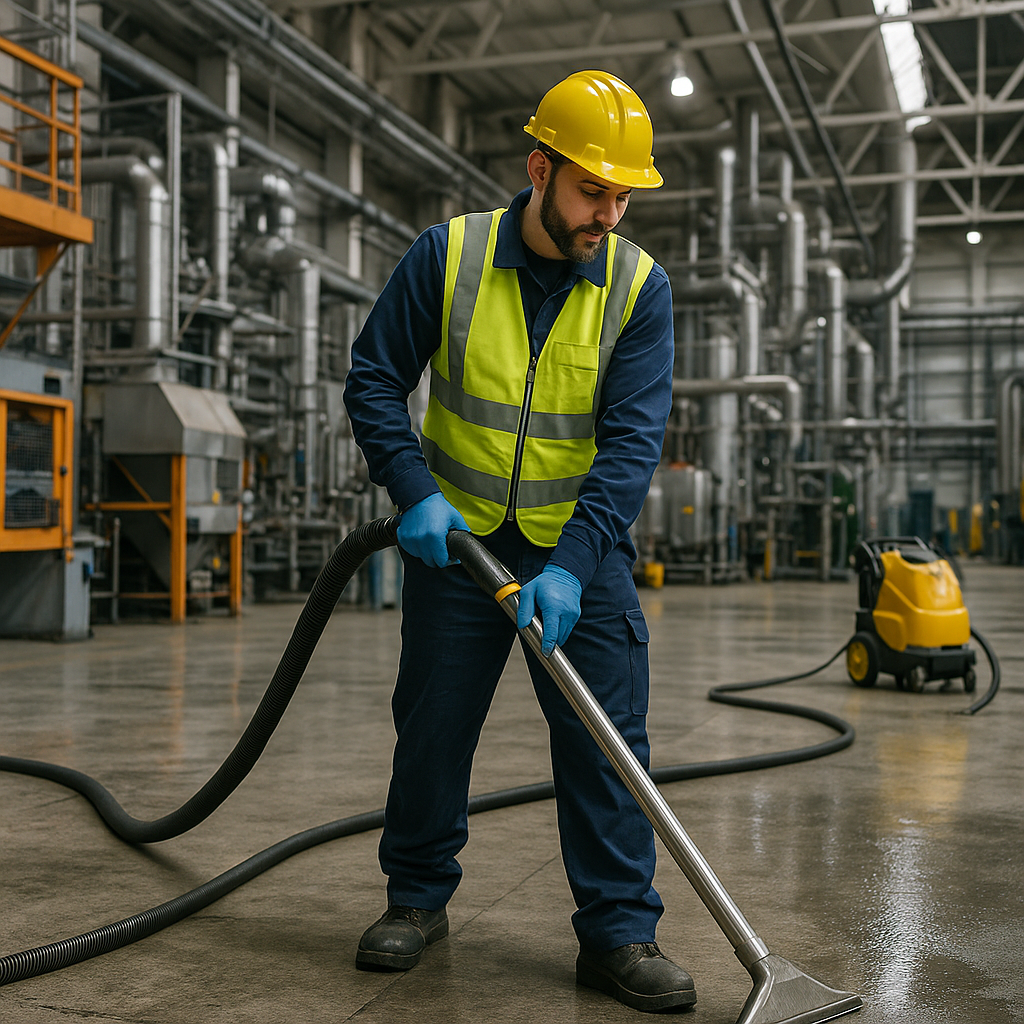
Industrial cleaning London is a critical service for maintaining hygiene, safety, and operational efficiency across various commercial and industrial sectors. As UK businesses strive to comply with stringent regulatory frameworks, understanding the key benefits and compliance requirements of industrial cleaning services is essential for facility managers, property owners, and operations leaders.
Understanding Industrial Cleaning in London
Industrial cleaning involves comprehensive cleaning processes tailored to factories, warehouses, manufacturing plants, and other large-scale commercial facilities. It goes beyond regular cleaning by addressing deep cleaning London needs, industrial hygiene UK standards, and specialised waste management.
What Does Industrial Cleaning Entail?
- Removal of industrial contaminants such as grease, oil, chemicals, and dust
- Deep cleaning of machinery, floors, walls, and ventilation systems
- Compliance with health, safety, and environmental regulations
- Waste disposal aligned with UK Duty of Care and Environmental Protection Act
This service is vital in reducing workplace hazards, enhancing employee safety, and preserving equipment longevity.
UK Industry and Compliance Landscape for Industrial Cleaning
UK industrial cleaning contractors must adhere to several regulatory frameworks to ensure safety and environmental responsibility:
- Health and Safety at Work Act 1974: Mandates safe working environments.
- COSHH Regulations: Controls hazardous substances handling.
- Workplace (Health, Safety & Welfare) Regulations: Sets workplace standards.
- BICSc Standards: Guides professional cleaning best practices.
- Duty of Care (Waste Regulations): Governs waste management and disposal.
Non-compliance can lead to legal penalties, operational disruptions, and reputational damage.
Core Benefits of Industrial Cleaning London for Businesses
1. Enhanced Industrial Hygiene and Safety
Maintaining high levels of industrial hygiene UK standards reduces the risk of workplace illnesses and accidents, ensuring compliance with health and safety legislation.
2. Operational Efficiency and Equipment Longevity
Regular deep cleaning London services prevent machinery breakdowns caused by dirt and contaminants, supporting uninterrupted production.
3. Regulatory Compliance Assurance
Professional cleaning contractors London are equipped to meet all relevant UK regulations, protecting businesses from fines and legal issues.
4. Improved Workplace Environment
A clean, well-maintained facility boosts employee morale, productivity, and client perceptions.
Use Cases by Industry
| Industry | Cleaning Focus Areas | Benefits |
|---|---|---|
| Retail | Shop floors, storage areas, waste disposal | Customer safety, brand image |
| Construction | Site clearance, equipment cleaning | Safety compliance, operational flow |
| Corporate | Offices, communal areas, HVAC systems | Healthier environment, compliance |
| Healthcare | Sterilisation, waste management, surface hygiene | Infection control, regulatory compliance |
Operational Workflows and Challenges
Industrial cleaning workflows typically involve initial site assessments, risk analysis, tailored cleaning plans, and post-cleaning audits. Challenges include managing hazardous materials, scheduling without disrupting operations, and ensuring staff training and certifications.
Mitigation strategies involve:
- Employing trained personnel with BICSc certification
- Using eco-friendly and compliant cleaning agents
- Implementing robust health and safety protocols
Importance for UK Businesses
Risk Reduction
Minimises workplace accidents and contamination risks.
Compliance Assurance
Ensures alignment with UK health, safety, and environmental laws.
Operational Continuity
Reduces downtime through preventive maintenance cleaning.
Cost Efficiency
Avoids costly repairs and legal penalties.
How to Choose the Right Industrial Cleaning Service Provider
Key Evaluation Criteria
- Relevant certifications (SIA, ISO 9001, BICSc)
- Experience in sector-specific cleaning
- Capacity for scalable operations
- Use of modern technology and transparent reporting
Operational and Compliance Considerations
- Staff training and health & safety adherence
- Data protection measures for sensitive sites
- Environmental responsibility and waste management
Common Misconceptions
-
Myth: Industrial cleaning is only about surface cleaning.
Reality: It includes deep cleaning, hygiene control, and compliance management. -
Myth: Outsourcing cleaning compromises security.
Reality: Professional contractors comply with SIA and data protection standards. -
Myth: Cleaning services are costly and non-essential.
Reality: They prevent costly downtime and legal risks.
Frequently Asked Questions
What is industrial cleaning London?
Industrial cleaning London refers to specialised cleaning services designed for large-scale industrial and commercial facilities in London, focusing on hygiene, safety, and compliance.
Why is deep cleaning important for UK factories?
Deep cleaning removes contaminants that can cause equipment failure and health hazards, helping to meet UK industrial hygiene standards.
How do cleaning contractors in London ensure compliance?
They follow UK regulations such as COSHH, Health and Safety at Work Act, and BICSc standards, with trained staff and certified processes.
What are the typical costs associated with industrial cleaning services?
Costs vary based on facility size, cleaning scope, and frequency but are balanced by reduced downtime and compliance risk.
Is industrial cleaning necessary for all industries?
Yes, especially those with high hygiene or safety requirements like healthcare, manufacturing, and food processing.
How is environmental compliance managed in industrial cleaning?
By adhering to Waste Regulations and using environmentally safe products and disposal methods.
What emerging trends affect industrial cleaning in the UK?
Technology adoption such as AI-driven cleaning robots, integrated service models, and sustainability-focused practices are shaping the sector.
Emerging Trends in UK Facilities and Security Industry
- Technology Adoption: Automated cleaning systems and smart monitoring improve efficiency.
- Integrated Services: Combining cleaning, security, and facilities management for streamlined operations.
- Sustainability & ESG: Increasing focus on environmentally responsible cleaning and waste management.
Conclusion
Industrial cleaning London plays a pivotal role in maintaining regulatory compliance, operational efficiency, and workplace safety for UK businesses. By understanding regulatory requirements and selecting qualified cleaning contractors London, organisations can mitigate risks, enhance hygiene, and support long-term business continuity. A structured, informed approach to industrial cleaning is essential for meeting today’s complex operational and compliance challenges across industries.