
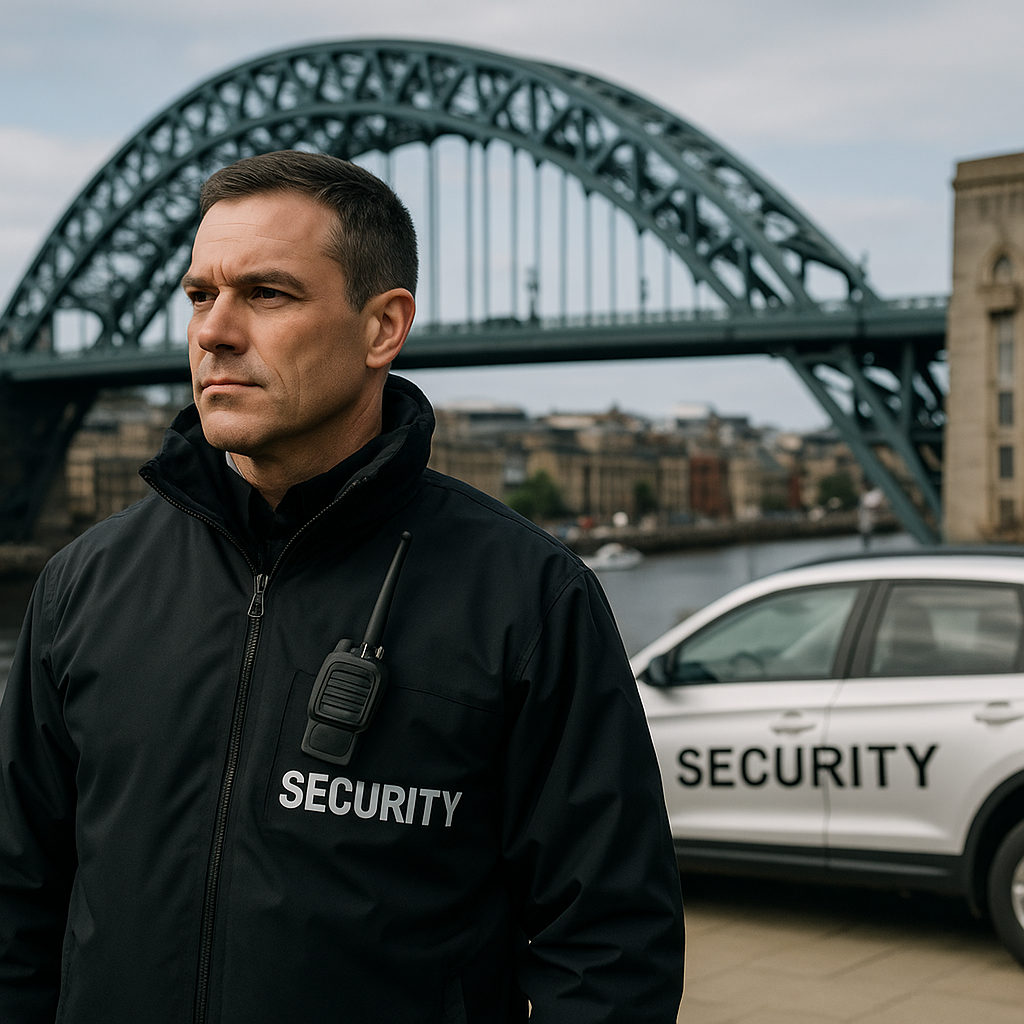
Newcastle Security Contracts: Local Knowledge or Scale?
A warehouse near Team Valley can have a very different risk pattern from a late-night bar off Bigg Market. One may need quiet overnight mobile patrols and alarm response. The other may need trained door staff, quick judgement, and calm handling of tired customers at 1 am.
That is why Newcastle security contracts should not be judged only by price or the size of the supplier. A large firm may have more staff and systems. A local security provider may know the back lanes, the problem hours, and the real travel time from Gosforth to the Quayside on match day.
So, what matters more: local knowledge or scale? Honestly, the better answer is fit.
Newcastle security contracts are rarely one-size
Security work looks simple from the outside. A guard stands at a gate. A patrol van drives past. A keyholder attends an alarm. But the contract behind that work carries the real value.
A good contract sets out who attends, how fast they respond, what gets checked, and how incidents are reported. It also explains what happens if a guard is sick, a site access code changes, or police need a clear incident log. Small gaps become expensive at 3 am.
For most Newcastle sites, the choice is not just local versus national. It is about matching the risk to the service model.
Common contract types include:
- Commercial guarding for offices, warehouses, retail parks, student sites, and construction gates
- Mobile patrols for locked premises, car parks, yards, and low-footfall sites
- Keyholding services for alarm call-outs, contractor access, and out-of-hours entry
- Event and door supervision for licensed venues and public-facing spaces
- Security response for alarms, break-ins, welfare checks, and urgent lock-up issues
The wording matters. A promise of fast attendance sounds nice, but the contract should show target response times, escalation steps, and reporting duties. I would not sign a vague service sheet, however friendly the sales meeting feels.
Where local knowledge helps most
Local knowledge is not just knowing the postcode. It is knowing how the city behaves at different hours. Newcastle changes a lot between a quiet Tuesday lunch and a Saturday night after football.
A security company Newcastle businesses trust should understand these patterns. Not in a dramatic way. Just the normal, useful things that save time and reduce mistakes.
Roads, estates, and awkward access
A local patrol driver may know that a certain rear gate on an industrial estate is always blocked by parked vans after 6 pm. They may know which loading bay needs a fob, which shutter sticks in winter, and which lane floods after heavy rain.
That sounds small. It is not small during an alarm call.
Local experience can help with:
- Faster route choices during match days or roadworks
- Better patrol timing around closing hours and staff handover
- Safer access to poorly lit yards, service lanes, and back doors
- More accurate notes on repeat nuisance, rough sleeping, or vehicle damage
- Easier communication with site managers who want plain updates, not long reports
People and patterns
Some risks repeat. A shop may have the same group causing trouble on Friday evenings. A student block may see tailgating after food deliveries. A construction site may lose fuel or tools from the same weak corner.
A local security provider can pick up these patterns faster if they keep the same officers on the same rounds. That is the human part. Honestly, it is hard to replace with a dashboard.
Still, local knowledge needs structure. It should be written into post orders, patrol checklists, and incident logs. If it stays only in one guard’s head, it disappears when that person takes leave.
Where scale starts to matter
Scale is not a bad word. Larger firms and strong regional security services can bring depth that a small team may struggle to match. This is especially true for multi-site clients, 24-hour operations, and contracts with tight cover needs.
A national or regional provider may have more relief officers, control room support, and formal training records. That can matter if your site needs cover every night of the year. No one wants a missed shift because one person had flu.
Staff cover and resilience
Security is a labour-heavy service. People get sick, cars break down, and officers leave jobs. A scaled provider should have a bench of trained staff who can step in without guessing the basics.
For larger Newcastle security contracts, ask how cover is managed. Do not accept a soft answer like, we always sort it. Ask who sorts it, by what time, and how you are told.
Useful scale indicators include:
- A staffed control room or duty manager outside office hours
- Relief officers trained on your site before they are needed
- Clear absence cover rules for shifts, patrols, and alarm attendance
- Documented training for SIA licensing, first aid, fire procedures, and site safety
- A named contract manager with set review dates
Systems, reporting, and proof of service
Bigger providers often invest in reporting tools. These may include patrol tags, time-stamped photos, GPS checks, and incident forms. Used well, they show what happened without drama.
But systems can also create lazy security. A guard can scan tags and still miss the broken fence beside them. The best setup mixes proof of attendance with proper observation.
For commercial guarding or mobile patrols, ask to see a sample report. A useful report states time, location, action taken, and next step. A weak report says all in order every night, even after a bin fire or forced gate.
What should be inside the contract
A security contract should read like an operating manual, not a brochure. It should be clear enough for a new duty manager to follow on a rainy Sunday. If you need a solicitor to understand basic response steps, it is too muddy.
The contract must also match the site. A quiet office in Jesmond does not need the same service as a logistics yard near the A1. Overbuying wastes money. Underbuying leaves staff exposed.
Service scope and response rules
The scope should say exactly what is included. This means shift times, patrol frequency, alarm duties, lock and unlock tasks, and who can authorise extra work. It should also state what is excluded.
For security response, clarity is key. If an alarm activates at 2:20 am, the process should not depend on guesswork.
A sensible alarm response flow is:
- Alarm receiving centre contacts the nominated keyholder or provider.
- The security response officer accepts the call and logs the time.
- The officer attends site, checks for signs of entry, and stays safe.
- Police are called if there is evidence of crime or risk to life.
- The client receives a short report with photos where useful.
Standards, insurance, and records
Ask about SIA licences for officers and supervisors. For guarding work, also check if the provider follows recognised British Standards such as BS 7499 for security guarding or BS 7984 for keyholding and response. Certification is not everything, but it is a good filter.
Insurance should be current and fit for the job. Public liability, employer liability, and professional cover may all matter, depending on the contract. Keep copies, not just verbal promises.
Good records protect both sides. They help with insurance claims, police statements, HR issues, and landlord disputes. A two-line WhatsApp message is not enough after a serious incident.
Common mistakes buyers make
Most people overthink the logo and underthink the shift. A polished proposal can hide weak delivery. A small local firm can also sound confident while running too close to the edge on staffing.
The lowest hourly rate is often the wrong place to start. If the rate cannot cover wages, holiday pay, supervision, uniform, training, transport, and margin, service quality will slip. It usually shows up as late patrols or tired guards.
Watch for these warning signs:
- No named contract manager after the sales meeting
- Vague response times for alarms and call-outs
- Patrol reports with no useful detail or site photos
- No clear plan for sickness, holidays, or emergency cover
- Guards moved too often, so nobody learns the site
- Poor handover between day staff, night staff, and the control room
Another mistake is asking for too much from the wrong service. A 10-minute mobile patrol cannot replace a stationed guard on a site with regular trespass. Keyholding services are not the same as full building management.
There is also a softer issue. Some businesses do not brief guards properly. If you do not share access rules, risk areas, staff names, and emergency contacts, even a strong provider will struggle.
A practical way to compare local and scaled providers
A fair comparison needs more than three quotes in a spreadsheet. You need to test how each provider thinks. A good supplier will ask detailed questions before giving a final price.
Use the same site brief for each bidder. Include opening hours, incident history, alarm details, access points, and any known trouble spots. Do not hide problems to get a lower quote.
A simple scoring method can help:
- Give 30% weight to service design and risk understanding.
- Give 25% to staffing plan, supervision, and absence cover.
- Give 20% to local knowledge and response routes.
- Give 15% to reporting, reviews, and contract management.
- Give 10% to price, with very low bids checked carefully.
This is not fancy procurement. It is just sensible buying. If a provider cannot explain how they will cover your site on a bank holiday weekend, that tells you plenty.
For Newcastle security contracts, I would also ask for a short walk-through at the actual site. Ten minutes beside the rear gate can show more than ten pages of proposal text. The best security people notice broken lighting, blind corners, and bad access control quickly.
Frequently Asked Questions
What are Newcastle security contracts?
Newcastle security contracts are service agreements for guarding, patrols, keyholding, and alarm response across Newcastle and nearby areas. They set out duties, hours, response targets, reporting rules, and the price. A clear contract reduces confusion during incidents.
How do I choose a security company Newcastle businesses can rely on?
Check SIA licensing, insurance, local coverage, supervision, and sample reports. Ask how they handle sickness, missed patrols, and urgent call-outs. A reliable security company Newcastle clients can use should give direct answers, not only a glossy proposal.
Is a local security provider better than a national firm?
A local security provider may be better for fast route knowledge, steady officers, and close site familiarity. A national or regional firm may be stronger for staff cover, systems, and multi-site contracts. The better choice depends on your risk, hours, and need for backup.
What should be included in keyholding services?
Keyholding services should include secure key storage, alarm attendance, site access checks, incident logging, and client updates. A basic process should be clear:
- Receive alarm or access request.
- Attend site within the agreed target time.
- Check for damage, entry, or safety risks.
- Escalate to police, contractors, or the client if needed.
- Send a written report.
Are mobile patrols enough for a commercial site?
Mobile patrols work well for lower-risk sites, closed offices, yards, and car parks needing visible checks. They may not be enough where trespass, theft, or staff safety issues happen often. In those cases, commercial guarding or longer site visits may be safer.
Why do response times vary across Newcastle?
Response times vary because of traffic, event nights, roadworks, distance from patrol bases, and officer availability. A provider should explain realistic targets for your postcode. For example, city centre access on a Saturday night is not the same as a quiet industrial estate at 4 am.
Final view: choose fit, not size alone
Newcastle security contracts work best when local knowledge and scale are balanced, not treated like rival camps. A provider should know the city, but also have the staff, records, and management to keep promises.
Local skill helps with real streets, real people, and real site habits. Scale helps with cover, systems, and steady service during pressure.
The right choice is the one that matches your site risk, budget, and hours without pretending security is simpler than it is.