
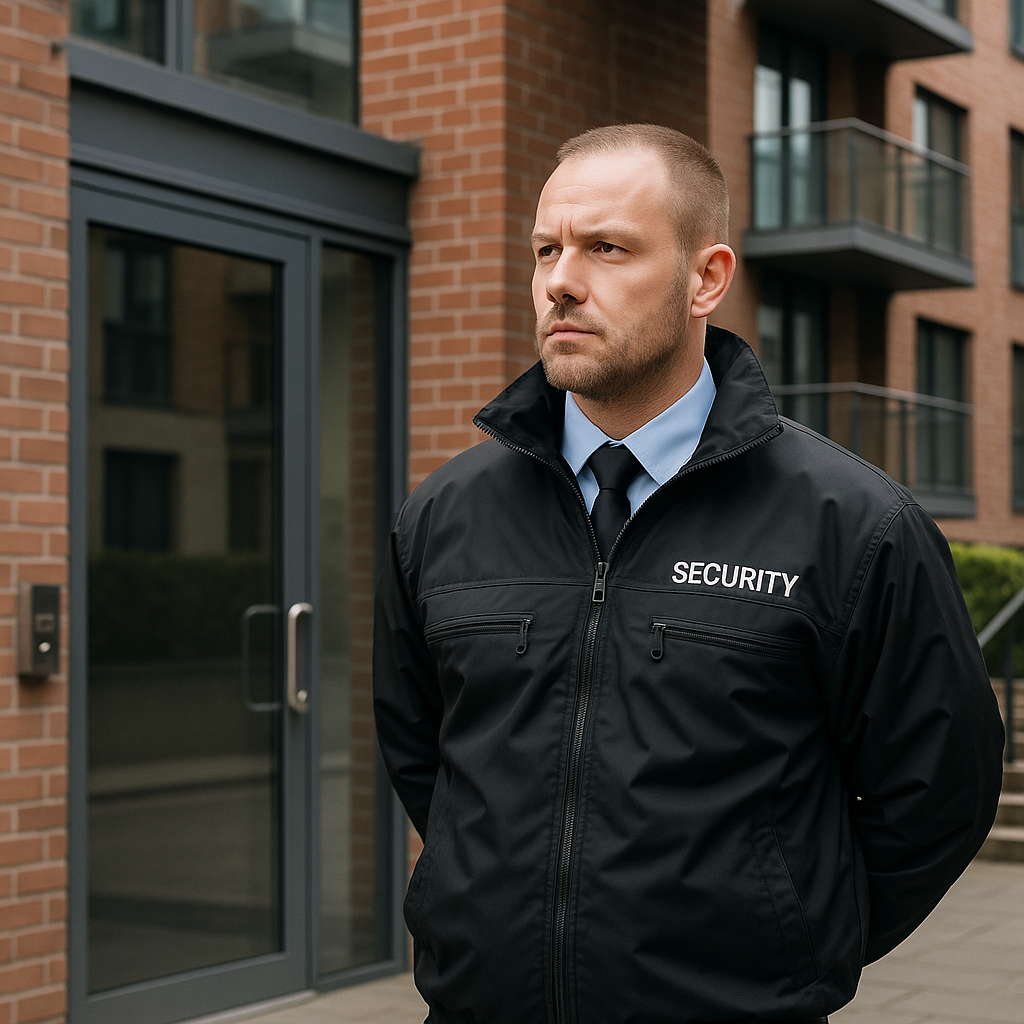
Choosing a Newcastle Security Company for Mixed-Use Premises
A ground-floor café closes at 11 pm, tenants above it are trying to sleep, and a delivery driver is still buzzing the side door near the bin store. That is where security gets messy. A Newcastle security company for mixed-use premises has to think about shop staff, residents, visitors, couriers, cleaners, parking spaces, and the odd person who follows someone through a door.
Mixed buildings are not like a simple office block. They have different routines sitting on top of each other, sometimes on the same staircase. Get the security wrong, and people either feel watched all the time or not protected at all.
Why mixed-use premises need a different security plan
Mixed-use premises usually carry two moods in one building. The commercial security side is active, public, and busy. The residential security side needs privacy, calm, and predictable access.
Think of a small development near Ouseburn. There may be a bar, a pharmacy, two office units, flats above, a rear yard, cycle racks, and one shared plant room. One bad door habit can affect everyone.
Small gaps become expensive.
Commercial areas bring public movement
Shops, cafés, salons, gyms, and clinics need easy access during trading hours. Staff may open early, close late, and handle cash or stock. A security plan has to allow business to run without making every customer feel like a suspect.
Useful checks include:
- Clear opening and closing routines for staff
- Panic buttons or duress alarms where cash is handled
- CCTV coverage at tills, shutters, back doors, and delivery points
- Alarm response rules for weekends and bank holidays
- Key control for cleaners, contractors, and temporary staff
Residential areas need quiet control
Residents care about different things. They want strangers kept out of lift lobbies, parcel rooms, stairwells, and car parks. They also want security staff who speak politely at 2 am, not someone barking orders in the lobby.
A good Newcastle security company should ask simple questions. Can residents enter without passing a shop queue? Are bins placed where people can hide? Does the intercom still show old tenant names?
What a proper security risk assessment should cover
A security risk assessment is not just a walk around with a clipboard. It should test how the building works on a wet Tuesday morning and again on a busy Friday night. Honestly, many buildings look safe at 10 am and fall apart after closing time.
The assessor should look at people flow, weak points, lighting, keys, CCTV views, and past incidents. They should also speak to someone who actually uses the building daily. A facilities manager sees one version; a night cleaner may see another.
The site walk should follow real routes
The best checks start at the pavement, not inside the office. A visitor’s route tells you a lot. So does the route used by delivery riders, residents with prams, and contractors carrying tools.
A practical assessment should review:
- Main entrances, rear doors, service corridors, and fire exits
- Shared lifts, stairwells, reception desks, and post areas
- Car parks, loading bays, cycle stores, and bin rooms
- Lighting levels around corners, gates, and external paths
- CCTV blind spots, camera height, and night image quality
- Alarm zones and who receives alerts after hours
The report must be usable
A thick report is useless if no one can act on it. Ask for clear risk ratings, photos, and fixes in plain English. I’d skip any provider who sends vague lines like “improve security posture” without saying which door, which camera, or which process.
A simple process works better:
- Inspect the full site during business hours.
- Recheck key areas after dark.
- Review incident logs from the last 6 to 12 months.
- Speak to management, tenants, cleaners, and security staff.
- Rank risks by urgency, cost, and likely harm.
- Agree who owns each fix and by what date.
Choosing the right Newcastle security company
The best security company Newcastle landlords choose is rarely the one with the loudest brochure. It is usually the one that asks awkward, useful questions before giving a price. Mixed-use sites punish guesswork.
Ask whether the firm already manages buildings with both commercial security and residential security needs. A warehouse guard setup will not fit a block with families, retail staff, and Airbnb-style visitor traffic. The tone is different.
Check licences, vetting, and local cover
Security staff in the UK should hold the right SIA licence for their role. For guards, door supervisors, CCTV operators, and keyholding staff, check the licence type matches the task. Do not treat this as paperwork only.
You should also ask about:
- BS 7858 screening or similar staff vetting
- Local supervisors who can reach site quickly
- Uniform standards for day and night shifts
- Incident reporting format and response times
- Insurance cover for public liability and employer liability
- Training in conflict handling, first aid, and fire procedures
Look for mixed-use judgement
A guard at a late-night bar entrance works differently from a concierge in a residential lobby. Your provider should know that. They may need to challenge a drunk visitor firmly at midnight, then help an elderly resident with a stuck fob at 7 am.
Ask for examples from Newcastle or nearby areas. A company working around the city centre, Jesmond, Quayside, Heaton, or Gosforth will understand footfall, student movement, match-day crowds, and night-time economy pressure better than a distant firm quoting from a template.
Access control, CCTV, and manned guarding should work together
Access control is often the backbone of a mixed-use site. It decides who can enter, where they can go, and at what time. But it only works if the rules match the building’s daily life.
A fob system may allow retail staff through the rear service door from 6 am to 8 pm. Residents may have 24-hour access to the main lobby, lift, car park, and cycle room. Contractors may get timed access for one plant room only.
Access control needs clean data
Old data creates real risk. If ex-tenants, former shop staff, and old contractors still have active fobs, the system is only pretending to protect the building. This happens more than people admit.
A sensible access control plan includes:
- Monthly removal of old users
- Separate access groups for residents, staff, cleaners, and contractors
- Timed permissions for deliveries and maintenance visits
- Visitor logs for tradespeople and short-stay guests
- Lost fob reporting with quick deactivation
- Audit trails after theft, nuisance, or damage
Manned guarding fills the gaps tech cannot
Cameras do not calm an angry visitor. A card reader cannot spot someone waiting to tailgate behind a resident. This is where manned guarding still earns its cost.
For mixed-use premises, guards may handle:
- Front desk cover during peak hours
- Patrols of car parks, plant rooms, and stairwells
- Lock-up checks for commercial units
- Welfare checks during noise complaints or late incidents
- Contractor sign-in and key issue
- Support during fire alarm activations
The trick is balance. Too many guards and the building feels heavy. Too few, and small issues become repeat incidents.
Questions to ask before signing a contract
A contract should make daily service clear. Do not rely on friendly promises made during a site visit. Put the awkward bits in writing, because they are the parts that matter at 1 am.
Ask how the Newcastle security company handles sickness, staff turnover, and last-minute cover. One missing guard can leave a loading bay open or a lobby unmanaged. The answer should be direct.
Good questions include:
- Who is the named site supervisor?
- How often will management visit the site?
- What is the guaranteed response time for alarms?
- How are incidents reported, and by what time?
- Can residents or tenants report concerns directly?
- What happens if the guard is late or absent?
- How are access cards, keys, and codes controlled?
- Are patrols tracked by NFC, QR points, or a guard tour system?
Pricing also needs care. The cheapest quote may mean thin staffing, poor vetting, or no local backup. Still, a high price alone does not prove quality.
Common mistakes building managers make
The first mistake is treating commercial and residential areas as one simple zone. A salon customer should not be able to wander near flats. A resident should not need to pass through a closed retail corridor to reach the lift.
The second mistake is buying cameras before fixing doors. CCTV helps after an incident, but a poorly closing fire door invites trouble every day. Spend on the weak hinge first if that is the real risk.
Other common mistakes are plain but costly:
- Keeping old fobs active after tenants move out
- Sharing master keys with too many contractors
- Placing cameras too high for clear face images
- Ignoring bin stores and cycle rooms
- Having no written lock-up routine for retail units
- Letting guards work without a clear site instruction file
- Using one generic incident log for very different problems
Most people overthink the shiny kit and underthink habits. A door propped open by delivery staff can defeat a costly system in five minutes. Training and simple rules matter.
Best practice for day-to-day security management
Good security is boring on purpose. Doors close, lights work, reports arrive on time, and staff know what to do. That is the aim.
Set a rhythm for checks. Weekly door tests, monthly fob audits, quarterly CCTV reviews, and an annual security risk assessment are a sensible start for many mixed-use premises. Busy sites may need more frequent checks.
Keep site instructions short and clear
A site instruction file should not be a dusty folder. It should tell guards and managers exactly what to do. Keep it updated after each tenant change or building layout change.
Include:
- Emergency contacts for landlords, agents, and maintenance teams
- Opening and closing times for each commercial unit
- Access rules for residents, visitors, couriers, and contractors
- Alarm panel locations and reset rules
- Fire procedure and evacuation meeting point
- Known problem areas, such as cycle stores or rear lanes
- Reporting rules for noise, damage, theft, and antisocial behaviour
Review incidents, not just invoices
Monthly meetings should cover more than hours worked. Look at patterns. If bike thefts happen near the same door, or noise complaints follow the same closing shift, the building is telling you something.
A useful monthly review covers incident numbers, response times, missed patrols, faulty equipment, tenant feedback, and open actions. Keep it short. Ten focused minutes can save a long argument later.
Frequently Asked Questions
What should a Newcastle security company provide for mixed-use premises?
A Newcastle security company should provide a site-specific security risk assessment, access control advice, incident reporting, and staff trained for both commercial and residential settings. For larger or higher-risk sites, it may also provide manned guarding, CCTV monitoring, keyholding, and alarm response.
How do I choose the best security company Newcastle has for my building?
Choose the best security company Newcastle can offer by checking three things first:
- SIA licensing and staff vetting.
- Experience with mixed-use premises.
- Clear reporting, supervision, and response times.
Then ask for a site visit before accepting a quote. A serious provider should inspect doors, routes, shared spaces, and past incidents before pricing the job.
Is access control enough for a mixed-use building?
Access control is useful, but it is not enough on its own for many mixed-use buildings. It controls permissions, yet it cannot stop tailgating, calm disputes, or check suspicious behaviour. Sites with late trading, shared car parks, or repeat incidents often need staff patrols or manned guarding as well.
What is the difference between commercial security and residential security?
Commercial security protects business operations, stock, staff, cash handling, and public-facing areas. Residential security focuses on tenant safety, privacy, controlled entry, parcel areas, lifts, and shared amenities. Mixed-use premises need both approaches to work without clashing.
How often should a security risk assessment be done?
A security risk assessment should normally be done once a year, or sooner after a serious incident, tenant change, refurbishment, or rise in complaints. For busy city-centre mixed-use premises, a shorter six-month review can be sensible. The assessment should lead to clear actions, not just a filed report.
Final thoughts
Choosing a Newcastle security company for mixed-use premises is about fit, not just price. The provider must understand business hours, resident privacy, shared doors, delivery habits, and how Newcastle streets change after dark.
A careful security risk assessment, clean access control, and well-managed manned guarding can make the building feel safe without making it feel harsh. That balance is usually where the best work sits.