
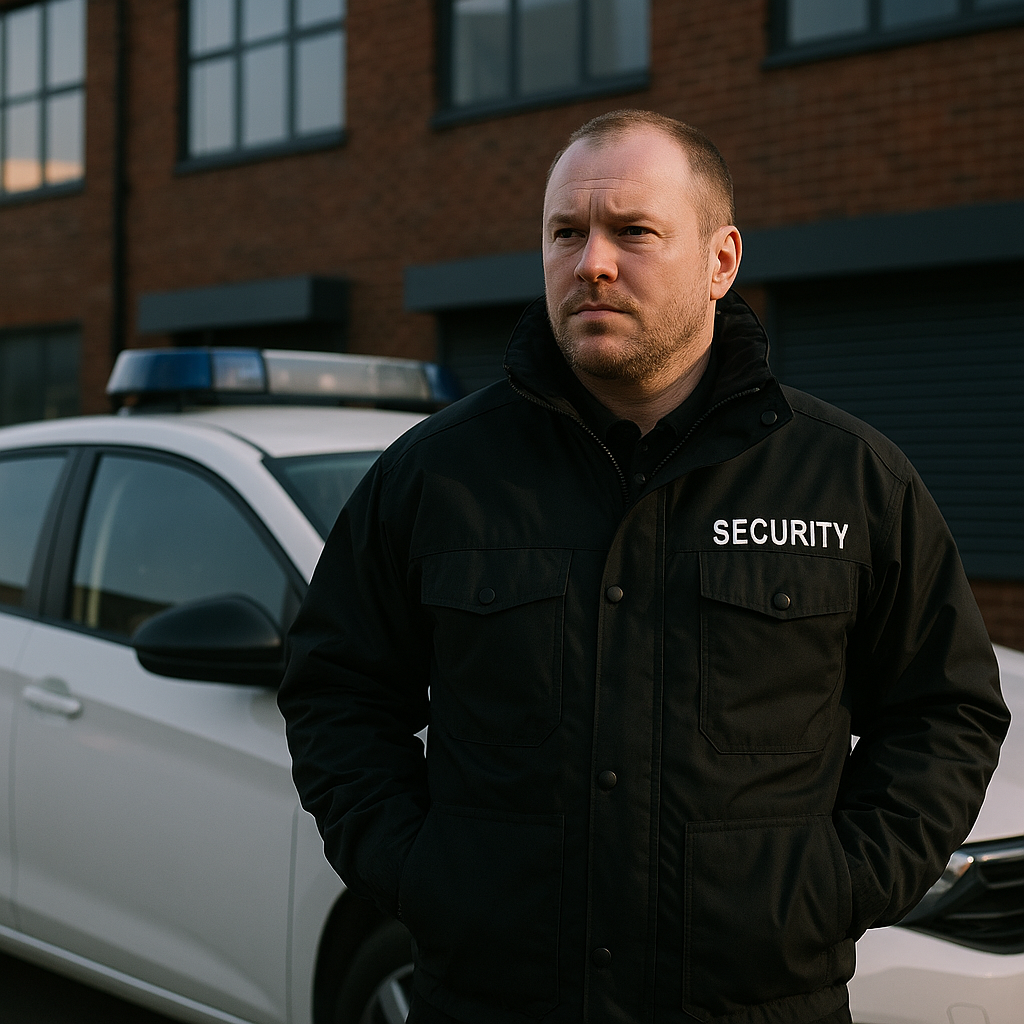
Local Security Presence Matters More Than a London Head Office
A shutter alarm goes off at 2:17 am in Gateshead. The site manager is half asleep, the police will want a verified reason to attend, and the person on the phone in London is checking a postcode on a screen. That gap matters. A local security presence can mean the difference between a calm check in 20 minutes and a messy morning with broken glass, lost stock, and no clear report.
Big offices look impressive on paper. Nice reception, smart brochure, national coverage. But for a warehouse, retail park, school site, yard, or office block in the North East, the real test is simple: who can get there, who knows the area, and who understands the site after dark?
Distance changes the quality of security
Security is physical work. Someone has to walk the fence line, check the rear fire door, meet the police, or reset an alarm panel in a cold plant room. You can manage some things from a central control room, but you cannot inspect a damaged roller shutter from 280 miles away.
A London head office may still run a decent operation. Honestly, many do. The issue is not the address alone; it is whether the company has trained people near your premises, proper local supervision, and a clear response plan for your area.
For commercial premises in Newcastle, Sunderland, Durham, and nearby industrial estates, local knowledge is not a soft extra. It affects real decisions, such as:
- Which roads are quiet after midnight and which ones slow down response.
- Where anti-social behaviour tends to build up near car parks or service yards.
- How long it usually takes to reach Team Valley, Byker, Cramlington, or the Quayside at night.
- Which sites need extra checks during match days, school holidays, or bad weather.
What local security presence actually means
A local office is not enough by itself. A rented room with a sign outside does not protect anything. A proper local security presence means the security provider has people, vehicles, supervisors, and decision-making close to the client sites.
You should be able to ask a simple question: if our alarm activates tonight, who attends and from where? If the answer is vague, I’d be careful. Good local security services can explain this without a long sales speech.
People who know the patch
Local guards and supervisors notice things that outsiders miss. They know which lane behind the unit is used as a shortcut. They know that one gate sticks in wet weather. They may also know the neighbouring business owner by name, which helps during shared site issues.
This is not glamour work. It is checking locks, writing clear notes, and spotting small changes before they become expensive problems. That is where local security management earns its money.
Vehicles already in the area
A local provider should have patrol routes that make sense. If the nearest patrol vehicle is always in another county, the response promise is just a line in a document. Local vehicles reduce wasted time and help keep visits regular.
For example, mobile patrols across Newcastle and surrounding business parks can cover several nearby sites in one planned route. That keeps costs sensible while still giving each site a visible presence.
Why Newcastle businesses need regional response
Newcastle has a mix of sites that need very different security cover. A city centre office block has different risks from a logistics yard near the A1. A student accommodation site does not need the same plan as a builders’ merchant with copper, plant, and fuel on site.
That is why regional response matters. A security company Newcastle businesses trust should understand the local traffic flow, police expectations, and common site problems. Not in a vague way. In a practical, “we have attended this type of site before” way.
A few examples make it clear:
- A retail unit may need lock-up checks after staff leave, mainly at rear doors and shutter points.
- A warehouse may need perimeter checks, loading bay inspections, and out-of-hours alarm attendance.
- A construction site may need fuel tank checks, CCTV call-out support, and weekend patrols.
- An office may need keyholding, staff escort support, and early morning access after a fault.
Local teams can also adjust faster. If there are repeated break-in attempts around one estate, patrols can be timed differently. If a site has a faulty door for two nights, the supervisor can brief the patrol team before the next visit.
How local teams handle alarms, patrols, and keys
Good security looks boring from outside. That is often the point. The best work is usually quiet, logged, and done before the client has to chase anyone.
A local team normally works through a clear process. It should not depend on one heroic guard remembering everything. Systems matter, but the people nearby matter just as much.
Alarm attendance without drama
Alarm response is where distance shows up fast. If an intruder alarm activates at a commercial premises, the responder may need to inspect external doors, speak to the alarm receiving centre, check for damage, and decide whether police attendance is needed.
A sensible response process looks like this:
- The alarm receiving centre contacts the nominated security team.
- The nearest trained responder accepts the call and travels to site.
- The responder checks entry points, shutters, yards, and visible internal areas if safe.
- Any damage, forced entry, or risk is reported to the client and emergency services if needed.
- The site is secured, reset where possible, and a written report is sent.
That sounds basic. It should be. Problems start when the responder is too far away, has no site notes, or cannot access the right key.
Keyholding that is actually useful
Keyholding is not just storing keys in a locked cabinet. It means the security company can attend without dragging a manager out of bed at 3 am. The keys must be labelled, audited, and held under strict control.
For a local business, proper keyholding can reduce stress quickly. A manager does not need to drive across town in pyjamas because a sensor picked up a loose banner in the wind. The local responder can attend, check, reset, and report.
Patrols with useful reporting
A patrol should be more than a car passing the front gate. Useful mobile patrols include timed visits, foot checks where safe, photo evidence, and notes that a manager can understand next morning.
Common patrol checks include:
- Fire exits, roller shutters, and side doors.
- Yard gates, fences, skips, and fuel areas.
- Staff entrances and visitor car parks.
- Signs of forced entry, water leaks, or lights left on.
Common mistakes when choosing a security provider
Many buyers choose the biggest-looking company because it feels safer. I get it. A national logo can calm the boardroom. But the wrong setup can leave your site waiting too long for help.
The cheapest quote can also hide weak cover. If a price looks too low, ask how many local officers are available overnight and who supervises them. Good security costs less than a serious break-in, but poor security still feels expensive.
Mistake 1: judging by head office address
A London address does not prove quality. A local address does not prove it either. What matters is the operational setup around your site.
Ask where the nearest responder starts from on a normal night. Then ask the expected attendance time for your postcode. A confident provider will give a clear range, not a foggy answer.
Mistake 2: ignoring site-specific risks
A standard plan may miss obvious problems. For example, a yard with dark rear fencing needs different checks from a front-facing office on a busy road. A food warehouse may need chilled area checks after power or door faults.
Walk the site before agreeing cover. Take ten minutes at the back gate, not just reception. That is where many real risks sit.
Mistake 3: accepting weak reports
A report that says “all okay” every night is not enough. It tells you almost nothing. Good reports mention time, location, condition, actions taken, and photos where needed.
For commercial premises, useful reporting also helps with insurance discussions. It shows that patrols happened, risks were spotted, and actions were recorded. Small details matter later.
Best practices for choosing local security services
Choosing a provider is easier if you ask practical questions. You do not need a 40-page tender for every site. You do need proof that the company can respond locally and manage the work properly.
A good security company Newcastle clients can rely on should be open about staffing, patrol routes, escalation, and reporting. If they dodge simple questions, that tells you something. Most people overthink the logo and underthink the night shift.
Use this checklist before signing:
- Confirm where responders and patrol vehicles are based.
- Ask for typical response times for your exact postcode.
- Check whether supervisors visit sites in person.
- Review sample patrol and alarm reports.
- Ask how keys are stored, audited, and returned.
- Confirm out-of-hours contact routes and escalation rules.
- Make sure the plan covers weekends and bank holidays.
You should also review cover after the first month. Look at reports, missed issues, timings, and any false alarms. Security management works best when it is treated as a live service, not a folder left in a drawer.
Frequently Asked Questions
What does local security presence mean?
Local security presence means a security provider has trained staff, patrol vehicles, supervisors, and response plans near your site. It is not just a local phone number. The test is whether they can attend, inspect, report, and secure the premises within a realistic time.
Why is a local security provider better than a London head office for Newcastle sites?
A local provider is often better for Newcastle sites because response depends on distance, local routes, and area knowledge. A London head office may manage contracts well, but it cannot replace nearby responders. For alarms, lock checks, and site incidents, local cover is more practical.
How do I compare local security services?
Compare local security services by checking the actual operating setup, not only the brochure. Use this short process:
- Ask where the nearest patrol team is based.
- Request typical response times for your postcode.
- Review sample incident and patrol reports.
- Check keyholding controls and supervisor visits.
- Speak to the person who will manage your site day to day.
What should mobile patrols include?
Mobile patrols should include planned visits, visible checks, foot inspections where safe, and clear reporting. The officer should check doors, shutters, gates, yards, and signs of damage. Photo evidence is useful for repeat issues or insurance records.
Is keyholding safe for commercial premises?
Keyholding is safe when keys are stored under strict control, logged, audited, and issued only to authorised responders. It also keeps managers away from risky night call-outs. The security company should explain how keys are labelled, stored, used, and returned.
How often should a security plan be reviewed?
A security plan should be reviewed after the first month, then at least every six months. It should also be reviewed after a break-in, repeated alarm activations, site changes, or new stock arriving. Security risks change faster than most site folders do.
Local presence beats a smart address
A smart London head office may look reassuring, but it does not walk your fence line at 1 am. For most sites, local security presence is what turns a promise into action. The best setup is simple: trained people nearby, clear reporting, proper key control, and managers who know the area.
That is the part worth checking before any contract is signed.