
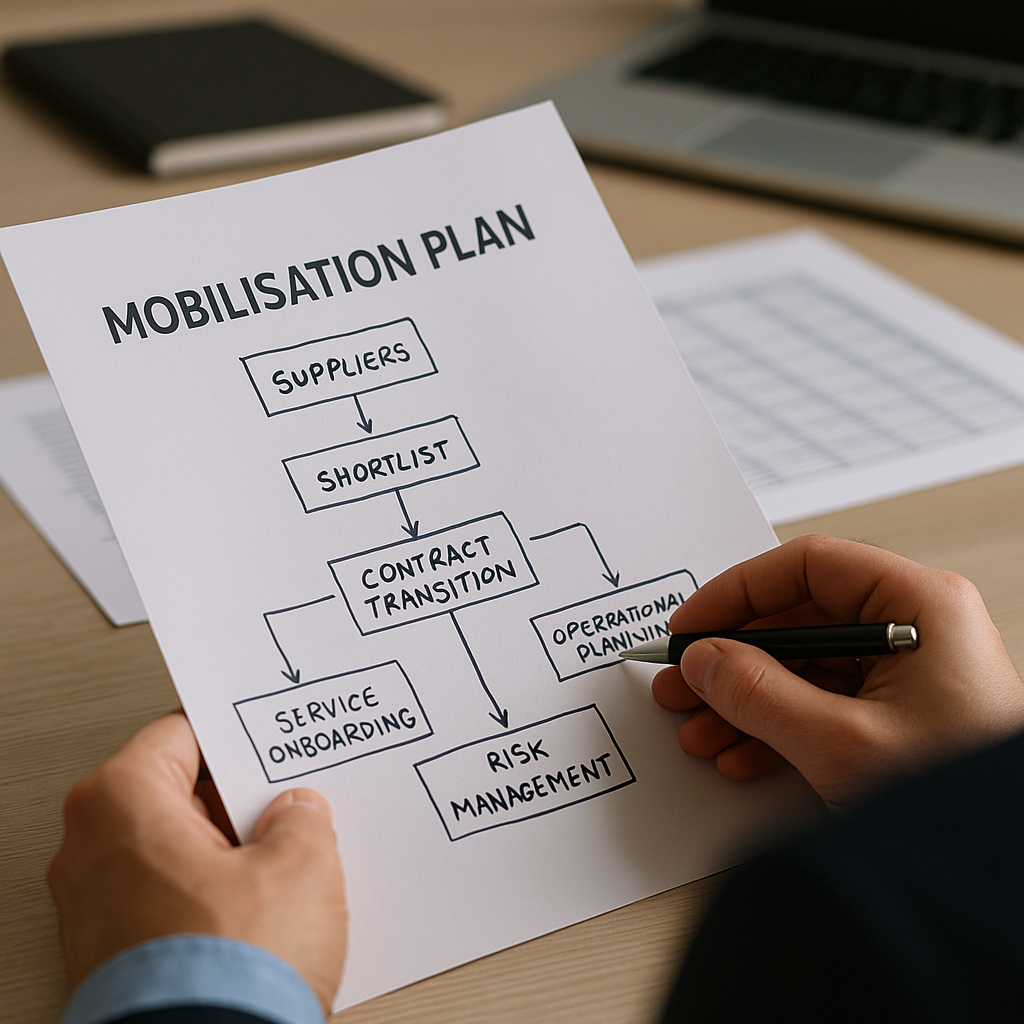
Most FM professionals have felt the pressure of a supplier shortlist that looks solid on paper but quickly unravels during the early days of a contract. Maybe it’s a cleaning contractor who can’t mobilise staff in time, or a security firm that struggles with SIA vetting. The pattern repeats: the FM supplier shortlist gets all the focus, but the FM mobilisation plan barely gets a mention until it’s too late. That’s where contracts stumble, compliance slips, and reputations take a hit. For any facilities manager in the UK, missing the mobilisation detail means gambling with safety, cost, and service continuity.
Quick Answer
Most FM supplier shortlists ignore the FM mobilisation plan, which is the detailed roadmap for onboarding, contract transition, compliance checks, and operational planning before service starts. A strong mobilisation plan reduces risk, ensures legal compliance, and sets up facilities management contracts for long-term success. Always ask shortlisted suppliers for a clear, site-specific mobilisation plan before awarding any contract.
Why Mobilisation Planning Gets Overlooked
Facilities management procurement often focuses on price, service scope, and contract terms. The mobilisation phase slips through the cracks, seen as a back-office task. But here’s what really happens:
- Procurement teams spend weeks comparing tenders and interviewing suppliers.
- Operations assume mobilisation is someone else’s job.
- Shortlists get approved without checking if suppliers can actually deliver mobilisation on time.
The result? Service onboarding gets delayed, compliance gaps appear, and the first 90 days of the contract are a scramble. It’s not just inconvenient. For regulated services like security, cleaning, or waste management, poor mobilisation can lead to legal breaches – like missing SIA checks, fire safety lapses, or failure to meet COSHH standards.
Common Reasons Mobilisation Is Missed
- Assumed experience: “They’re a big name, they must know what to do.”
- Tender fatigue: After months of procurement, teams skip the details.
- No mobilisation template: Lack of a standard FM mobilisation plan.
- Pressure to start fast: Sites want changeovers to happen overnight.
I’ve seen even FTSE 100 sites trip up this way. The cost? Emergency cover, fines, or months lost fixing first impressions.
What Is an FM Mobilisation Plan?
An FM mobilisation plan is a detailed, step-by-step project plan that covers every action needed before day one of a new facilities management contract. It’s the difference between a smooth handover and a chaotic start.
Key Elements of a Mobilisation Plan
- Contract transition milestones
- Staff onboarding and vetting (DBS, SIA, right to work)
- Asset handover (keys, access cards, plant rooms)
- Compliance checks (Health and Safety at Work Act, COSHH, Fire Safety)
- Planned Preventive Maintenance (PPM) schedules
- Training and inductions
- Supplier and subcontractor onboarding
- IT and systems integration
- Site-specific risk assessments
Why It Matters
- Reduces risk: No missed compliance or safety steps
- Builds trust: Clients see professionalism
- Prevents downtime: Services start on schedule
- Saves money: Avoids emergency cover or retroactive fixes
A mobilisation plan isn’t just a schedule. It’s a risk management tool, a compliance checklist, and a communication plan – all in one.
The Danger of Ignoring Mobilisation on the FM Supplier Shortlist
Most FM supplier shortlists focus on cost, references, and technical ability. But if mobilisation isn’t part of selection, you’re betting on luck. Here’s what can go wrong:
- Security services: Staff arrive without SIA badges; site left exposed.
- Cleaning: TUPE not managed, so staff don’t transfer; standards fall.
- Property services: Asset registers missing; PPM delayed.
- Waste management: No Duty of Care paperwork; legal risk.
Real-World Example: Office Building Transition
A London office block switched cleaning contractors. The new supplier won on price and references, but their mobilisation plan was a generic two-pager. On day one:
- Only half the staff turned up (no TUPE follow-up)
- No COSHH data on site (risk of HSE fines)
- Cleaning cupboard locks hadn’t been changed
It took three weeks and two site audits to get back on track. The client lost trust and spent extra on temporary cleaning.
Shortlist Criteria Must Include Mobilisation
When building your FM supplier shortlist, always ask for:
- A site-specific FM mobilisation plan
- Named mobilisation lead and team
- Timeline with milestones
- Compliance checklists
If a supplier can’t give this, think twice. Honestly, I’d skip them.
What Should a Good FM Mobilisation Plan Cover?
A proper FM mobilisation plan is detailed, site-specific, and realistic. It should avoid vague promises and instead lay out clear actions, responsibilities, and deadlines.
1. Contract Transition and Service Onboarding
The transition phase is where most contracts either succeed or stumble. Key steps include:
- Kick-off meeting with client, outgoing supplier, and new supplier
- Asset and document handover (registers, certificates, keys)
- Staff transfer (TUPE process)
- Risk assessments and method statements
- Site inductions and training
- PPM schedule upload to CAFM/CMMS
- Go-live readiness review
If any of these are skipped or rushed, expect problems on day one.
2. Compliance Checks and Legal Requirements
UK regulations are strict. Your plan must include:
- Health and Safety at Work Act compliance
- COSHH register for cleaning chemicals
- Fire Safety checks (alarms, extinguishers, evacuation routes)
- Waste Duty of Care paperwork
- SIA vetting for security staff
- Equality Act access reviews (for public facilities)
Missing even one can lead to legal action or fines. A good plan lists each compliance step with responsible persons and deadlines.
3. Staff Onboarding, Vetting, and Training
Most FM contracts rely on transferred or new staff. The plan must show:
- Right to work checks (passport, visa)
- DBS and SIA vetting
- Site-specific induction (fire exits, PPE, hazards)
- Role-specific training (manual handling, COSHH, first aid)
- Uniform and ID issue
TUPE transfers are a legal minefield if mishandled. Always clarify which staff are transferring and how their records will be managed.
4. Asset and Systems Handover
Facilities management is built on accurate asset data. Mobilisation should include:
- Asset register review and update
- Tagging and labelling assets
- Uploading PPM schedules to CAFM/CMMS
- Handover of maintenance logs and certificates
- IT systems integration
If your new supplier can’t show how they’ll collect and verify asset data, expect gaps in maintenance and compliance.
5. Risk Management and Contingency Planning
Mobilisation always has surprises. Good plans have risk logs and contingencies:
- Back-up staff for no-shows
- Temporary cover for delayed TUPE
- Emergency contact lists
- Contingency cleaning supplies
- Alternative waste disposal routes
This isn’t just box-ticking. If a flood or power cut hits during mobilisation, you need a plan – not panic.
Comparing Mobilisation Plans: What to Look For
Not all mobilisation plans are equal. Some are two-page outlines; others run to 30 pages with Gantt charts and risk registers. Here’s how to compare them:
| Feature | Weak Plan | Strong Plan |
|---|---|---|
| Site-specific detail | Generic | Tailored to your building |
| Timeline | Vague or missing | Clear milestones, deadlines |
| Compliance coverage | Minimal | Lists all legal checks |
| Named responsible persons | Not named | Each task owner listed |
| Risk and contingency planning | Not covered | Risks and actions listed |
| Asset and staff onboarding | Skimmed over | Full process detailed |
Ask for sample plans from previous contracts. Check if their timeline is realistic – mobilising a multi-site IFM contract takes weeks, not days.
Mobilisation in Different FM Service Areas
Security Services
- Must include SIA licence checks, background vetting, uniform issue, and emergency procedures.
- SIA regulations require all security staff to be vetted and licensed before starting.
- Mobilisation must account for vetting lead times (can be up to 4 weeks).
Cleaning and Washroom Services
- COSHH register must be on site before chemicals arrive.
- TUPE transfer of cleaning staff is common; mishandling leads to staff shortages or legal claims.
- Inductions should cover site hazards, PPE, and cleaning methods.
Property and Building Maintenance
- Asset handover (plant, M&E, fire systems) is critical.
- PPM schedules must be uploaded to CAFM/CMMS before start.
- Certificates (gas safety, electrical) must be checked and logged.
Waste Management
- Duty of Care paperwork must be in place from day one.
- Waste transfer notes and licenses should be checked.
- Emergency waste removal plans for blocked chutes or missed collections.
Grounds Maintenance
- Mobilisation must include site surveys, equipment delivery, and staff induction.
- Risk assessments for pesticides, machinery, and lone working.
Compliance and Regulatory Considerations in Mobilisation
UK facilities management operates under strict legal frameworks. Mobilisation is the first test of compliance.
Key Regulations to Address
- Health and Safety at Work Act 1974: Full risk assessments and safe systems of work
- Workplace (Health, Safety and Welfare) Regulations: Welfare checks, access, facilities
- Environmental Protection Act: Waste management and Duty of Care
- COSHH Regulations: Chemical safety in cleaning and maintenance
- Fire Safety Regulations: Emergency plans, alarm testing, evacuation procedures
- Equality Act: Accessible services and facilities
- SIA Requirements: Security staff vetting and licensing
- ISO and British Standards: Where specified in client requirements
Common Compliance Pitfalls
- Delayed or missing risk assessments
- Outdated asset registers
- Staff working without proper vetting
- Missing COSHH or fire safety documentation
- Incomplete TUPE transfers
A mobilisation plan should list every compliance step, responsible person, and target date. If a supplier can’t show this, keep looking.
Operational Planning and Service Onboarding: Step-by-Step
Here’s a typical FM mobilisation process for a multi-site contract:
- Pre-award meeting: Clarify mobilisation expectations
- Contract signing: Mobilisation plan shared and agreed
- Kick-off meeting: All key stakeholders present
- Asset and document handover: Registers, keys, certificates
- Staff TUPE/transfer: Legal process started
- Compliance checks: Risk assessments, COSHH, fire safety
- System integration: CAFM/CMMS setup, IT access
- Training and induction: Site-specific, role-specific
- Dry run/service test: Optional for complex sites
- Go-live review: Sign-off from client and supplier
This process can take from two weeks (for small sites) to two months (for large IFM contracts).
Cost Factors and Budgeting for Mobilisation
Mobilisation isn’t free. Good suppliers budget for it, bad ones bury costs or cut corners. Typical mobilisation costs include:
- Project manager or mobilisation lead salary
- Recruitment, vetting, and training of staff
- Printing of induction packs, signage, and asset labels
- IT system setup (CAFM, access control)
- Temporary cover or overtime for TUPE delays
- Compliance audit fees
Always ask shortlisted suppliers for a mobilisation cost breakdown. If it’s zero or suspiciously low, expect problems later.
Best Practices for FM Mobilisation Planning
- Always request a site-specific mobilisation plan in the tender process
- Insist on a mobilisation lead with named contacts
- Demand a detailed compliance checklist covering all legal requirements
- Review previous mobilisation examples from similar contracts
- Agree on timelines and milestones before contract award
- Build in contingency plans for staff, assets, and compliance
- Schedule a post-mobilisation review to capture lessons learned
If you do nothing else, just ask: “What’s your mobilisation plan for our site?” You’ll be surprised how many suppliers go silent.
Industry Trends: Digital Mobilisation and Integrated FM
FM mobilisation is changing. Digital tools and integrated FM models are raising expectations.
Digital Tools
- CAFM and CMMS: Digital mobilisation checklists, asset uploads, compliance logs
- Mobile apps: Inductions, risk assessments, and site reporting
- Automated vetting: Faster SIA/DBS checks
Integrated FM (IFM)
- Single mobilisation plan for multi-service contracts
- Shared systems for cleaning, security, maintenance
- Greater focus on communication and cross-team training
Clients expect suppliers to use digital tools for mobilisation tracking and reporting. Manual, paper-based plans are now a red flag.
Frequently Asked Questions
What is an FM mobilisation plan in facilities management?
An FM mobilisation plan outlines all actions, compliance checks, staff onboarding, and asset handover tasks needed before a new facilities management contract starts. It ensures a smooth, compliant transition between suppliers.
Why do most FM supplier shortlists miss the mobilisation plan?
Most shortlists focus on price and technical ability, overlooking mobilisation because it’s seen as an operational detail. This can lead to delays, compliance breaches, or service failures during contract transition.
What should a facilities management mobilisation plan include?
A good FM mobilisation plan should cover:
– Contract transition milestones
– Staff onboarding and vetting
– Asset handover
– Compliance checks (Health & Safety, COSHH, SIA, Fire Safety)
– Training and inductions
– System integration
– Risk and contingency planning
How long does facilities management mobilisation take?
Mobilisation can take 2 – 8 weeks depending on contract size, number of sites, and service complexity. Multi-site or integrated FM contracts often require longer timelines for asset handover and compliance checks.
What are common risks during facilities management mobilisation?
Common risks include:
– Delayed staff transfers (TUPE)
– Missing compliance documents
– Incomplete asset registers
– Unvetted security staff
– Failure to upload PPM schedules
How can you compare FM supplier mobilisation plans?
Compare by checking for site-specific detail, clear timelines, compliance coverage, named responsible persons, and risk/contingency planning. Weak plans are generic and vague.
What regulations must FM mobilisation plans meet in the UK?
Key regulations include:
– Health and Safety at Work Act 1974
– COSHH Regulations
– Fire Safety Regulations
– SIA requirements for security
– Waste Duty of Care
– Equality Act (for public facilities)
How should FM mobilisation handle TUPE staff transfers?
The plan should identify affected staff, communicate timelines, manage right to work and vetting checks, and provide site-specific inductions. Poor TUPE handling can cause legal and operational problems.
What is the role of CAFM/CMMS in mobilisation?
CAFM/CMMS systems support mobilisation by storing asset registers, uploading PPM schedules, tracking compliance tasks, and generating mobilisation reports.
Can mobilisation be skipped for small FM contracts?
Skipping mobilisation, even for small contracts, increases the risk of missed compliance, service disruption, or staff issues. Always insist on a basic mobilisation plan.
Who is responsible for the FM mobilisation plan?
The supplier typically leads mobilisation, with oversight from the client’s FM team. A named mobilisation lead should coordinate all tasks and report progress regularly.
What’s the cost of poor FM mobilisation?
Poor mobilisation can lead to emergency cover costs, fines for compliance breaches, extra project management fees, and reputational damage with building users.
Conclusion
Most FM supplier shortlists in the UK still miss the critical step of asking for a detailed FM mobilisation plan. Without it, even the best contract can unravel before service begins. By making mobilisation planning a core part of supplier selection, facilities managers reduce risk, ensure compliance, and set up contracts for long-term success. Don’t leave mobilisation as an afterthought – put it at the top of your shortlist criteria.