
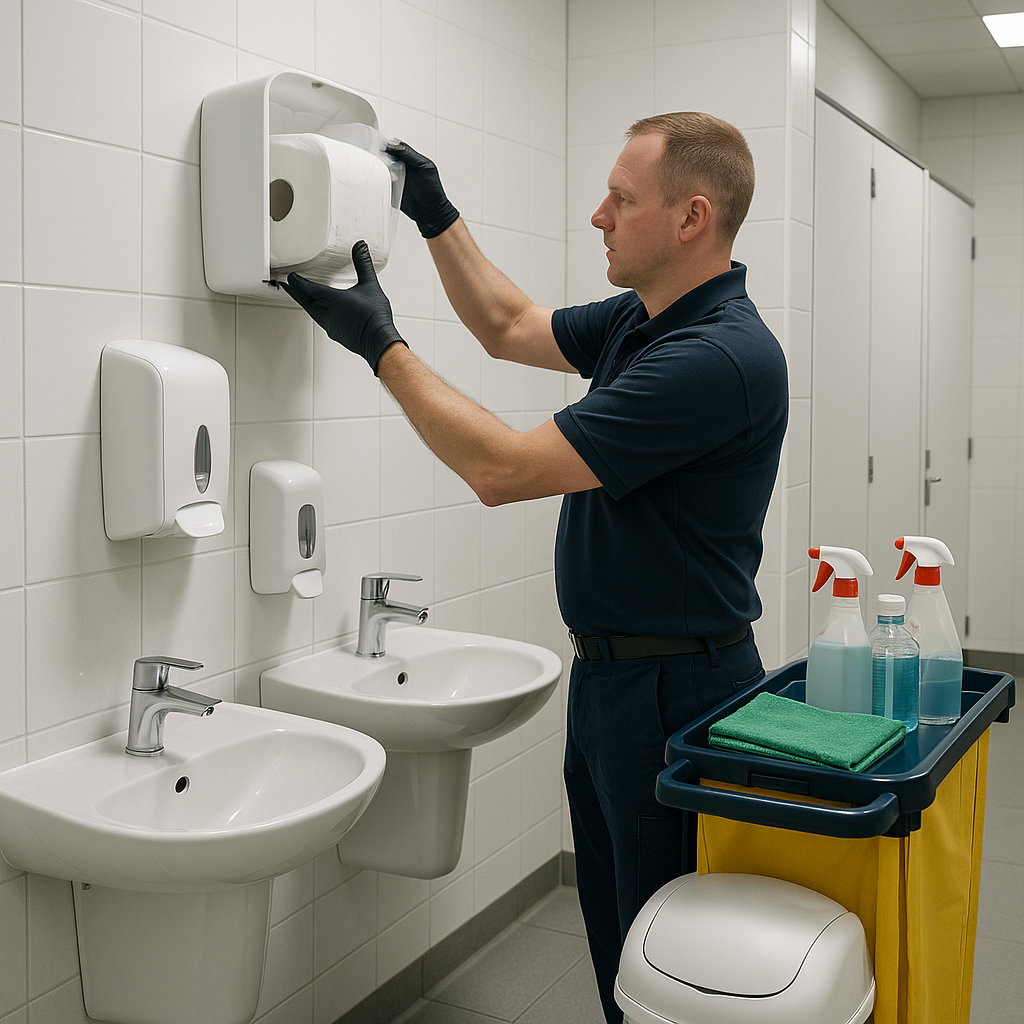
Washroom Services as a Test of FM Provider Discipline
Facilities managers in the UK rarely get much feedback about washroom services – unless something goes wrong. One missed refill, a blocked toilet, or a soapless sink, and suddenly the FM helpdesk lights up. This is not because people expect hotel-level comfort at work. It’s because basic hygiene, privacy, and dignity depend on washroom standards being met, every single day. For many organisations, washroom services UK are the hidden backbone of workplace wellbeing, compliance, and even reputation. If an FM provider can’t deliver consistency here, what does that say about their wider discipline?
Quick Answer
Washroom services UK are a direct test of FM provider discipline because they require strict consistency, regulatory compliance, and well-managed consumables. High standards in workplace hygiene, cleaning, and consumables management reflect overall FM provider quality. Missed details in washroom upkeep often reveal deeper operational weaknesses.
Why Washroom Services Reveal FM Discipline
It’s easy to overlook washrooms – until there’s a problem. Washroom services act as a daily audit of an FM provider’s reliability, attention to detail, and process discipline. Even one lapse can trigger staff complaints or non-compliance with UK workplace regulations.
- Consistency matters most. Washrooms are used constantly. A missed check means issues pile up fast.
- Regulations are strict. UK law (Workplace Regulations 1992, Health and Safety at Work Act 1974) requires adequate, clean, and hygienic facilities.
- Reputation is fragile. Visitors and staff judge a building by its washrooms. Failures here are remembered.
Honestly, washroom management is like a pressure test. If an FM provider’s processes are weak, it shows up here first.
What Makes Up Professional Washroom Services?
Professional washroom services go far beyond mopping and refilling. They combine cleaning, consumables, compliance, and regular checks into a tightly managed routine.
Core Service Components
- Daily cleaning and sanitisation: Toilets, basins, floors, touchpoints
- Consumables management: Toilet rolls, soap, hand towels, air fresheners
- Waste collection: Sanitary bins, nappy bins, clinical waste
- Deep cleaning: Scheduled descaling, anti-bacterial treatments, odour control
- Maintenance checks: Fixing leaks, blocked drains, broken locks
- Compliance audits: Records for cleaning, waste removal, and safety
Specialist Services
Some buildings require extra services:
- Sharps disposal (for health clinics)
- Water testing (legionella risk)
- Accessible washroom adaptations (Equality Act compliance)
- Touch-free dispensers
Consumables Management: The Operational Backbone
Running out of toilet paper or soap is not just embarrassing, it can breach regulations. Professional FM providers use stock control systems, barcode scanning, or digital checklists to track usage and trigger reorders. Some even use smart dispensers that send alerts when levels are low.
Regulatory and Compliance Requirements in the UK
Washroom services UK are governed by several regulations. Missing any of these can lead to fines or reputational damage.
Key Regulations
| Regulation | Requirement |
|---|---|
| Health and Safety at Work Act 1974 | General duty to ensure health, safety, welfare |
| Workplace (Health, Safety and Welfare) Regs | Adequate and accessible sanitation, clean facilities |
| Environmental Protection Act & Duty of Care | Safe waste disposal (sanitary, clinical, sharps) |
| COSHH Regulations | Safe handling of cleaning chemicals |
| Equality Act 2010 | Accessible washrooms for disabled people |
| British Standards (BS 6465, 8000, etc) | Detailed washroom design and maintenance guidelines |
Compliance in Daily Operations
- Keep cleaning logs and waste transfer notes for inspections.
- Ensure every cleaning chemical is labelled and COSHH assessed.
- Regularly check for accessibility features: grab rails, alarms, clear signage.
- Use only licensed waste carriers for sanitary and clinical waste.
Common Compliance Mistakes
- Letting cleaning log sheets go unsigned
- Skipping deep cleans to save time
- Forgetting to restock first-aid or sharps bins
- Using non-compliant cleaning chemicals
Why Washroom Services Matter for Workplace Hygiene
A spotless reception is pointless if the toilets smell or run out of soap. Washroom hygiene directly affects staff health, absence rates, and overall satisfaction. In the post-COVID era, people notice touchpoints and expect visible cleaning.
Hygiene Risks in Poorly Managed Washrooms
- Spread of bacteria and viruses (toilet flushes, taps, door handles)
- Blocked drains or leaks leading to slips and trips
- Overflowing waste bins causing odours or contamination
- Lack of soap or towels leading to poor hand hygiene
Workplace Absence and Wellbeing
According to the CIPD, minor illnesses and stomach bugs are among the top causes of workplace absence in the UK. Many of these can be traced to poor handwashing or unclean facilities. Honestly, a clean washroom is worth more than a motivational poster.
Staff Satisfaction and Retention
People notice washroom quality. It shapes how they view their employer. If staff regularly complain about toilets, it’s a sign that FM provider quality is slipping.
Service Delivery Models for Washroom Services UK
Organisations approach washroom services in several ways, depending on building size, risk profile, and budget.
In-House vs Outsourced
- In-house teams: Direct control, but needs more supervision and training
- Outsourced FM providers: Specialist expertise, set KPIs, service consistency
- Hybrid models: In-house for day cleaning, outsourced for deep cleaning or waste
Integrated Facilities Management (IFM)
Some organisations include washroom services as part of a single IFM contract. This can cover:
- Cleaning
- Consumables
- Waste management
- Building maintenance
It simplifies reporting and often improves service consistency. But, it relies heavily on provider discipline.
Service Level Agreements (SLAs) and KPIs
Professional washroom services always come with clear SLAs and KPIs:
- Refill rates (how often dispensers are empty)
- Cleaning frequency (daily, hourly, response to incidents)
- Waste collection schedules
- User satisfaction scores
- Audit and inspection results
Missed SLAs in washrooms usually point to deeper FM issues.
Consumables Management: Avoiding the Basics Going Wrong
Consumables are the most visible sign of FM discipline. If staff find empty soap or paper dispensers, trust drops fast.
Stock Control Systems
- Manual checklists (paper or digital)
- Barcode or QR code scanning
- Smart dispensers (IoT alerts)
- Just-in-time deliveries
Reordering and Inventory Policies
Professional providers set minimum stock levels and reorder points. Some use monthly usage data to predict peaks (for example, during flu season or after events).
Cost and Environmental Considerations
- Bulk buying saves money but risks wastage or expiry
- Eco-friendly options (recycled paper, biodegradable bags)
- Reducing single-use plastics
Cleaning Standards and Quality Assurance
Cleaning standards must be clear, measurable, and regularly checked. Ambiguity leads to missed tasks or disputes.
Setting Cleaning Standards
- Use British Standards (BS 6465 for sanitary installations)
- Cleaning specifications: list every task (toilets, sinks, mirrors, bins)
- Colour-coded cleaning equipment to prevent cross-contamination
- Regular deep cleans (monthly or quarterly)
Auditing and Inspection
- Random spot checks by supervisors
- ATP (adenosine triphosphate) testing for surface hygiene
- User feedback (QR codes in washrooms for anonymous comments)
Common Quality Failures
- Skipping hard-to-reach spots (behind toilets, under sinks)
- Not replacing air fresheners on time
- Dirty bins or overflowing sanitary units
Training and Supervision: Building Service Consistency
Consistent washroom standards depend on staff being well-trained and closely supervised. Even a good process fails if people cut corners.
Training Requirements
- COSHH training for safe chemical use
- Manual handling for waste bins
- Infection control (especially in healthcare settings)
- Customer service (discreet, respectful cleaning)
Supervision and Motivation
- Regular team briefings
- Mystery audits
- Recognition for excellent performance
Minimising Staff Turnover
High turnover means more mistakes. Some FM providers use incentives, fair pay, and career progression to keep good people.
Workplace Hygiene, Wellbeing, and Perception
Washrooms shape how people feel about a building. Even the fanciest office loses points if staff avoid the toilets.
Washroom Experience: Beyond Cleanliness
- Odour control: Scented air fresheners, regular bin changes
- Privacy: Working locks, sound insulation
- Temperature and ventilation: Prevents damp and smells
- Accessibility: Wide doors, grab rails, alarm pulls
Impact on Visitors
First impressions count. Poor washrooms can cost business, especially in hospitality, healthcare, and high-end offices.
Mental Health and Dignity
If people avoid drinking water to skip the toilets, that’s a problem. Good washrooms support dignity and inclusivity.
Risk Management and Incident Response
Washroom failures can quickly turn into health and safety incidents or even claims.
Common Risks
- Slips from wet floors
- Exposure to bodily fluids or sharps
- Blocked drains leading to flooding
- Chemical spills
Incident Response Process
- Identify and report the issue (staff or user)
- Isolate the area if needed
- Deploy cleaning/maintenance team
- Fix, clean, and restock
- Log the incident and update records
Insurance and Liability
Poor washroom management can invalidate insurance or lead to legal claims. Keep records of cleaning, maintenance, and incidents.
Environmental and Sustainability Considerations
Washrooms use a lot of water, paper, and chemicals. Progressive FM providers aim to cut environmental impact.
Sustainable Practices
- Low-flow toilets and taps
- Automatic lighting and hand dryers
- Recycled or FSC-certified paper products
- Eco-friendly cleaning chemicals
- Waste segregation (sanitary, clinical, recyclable)
Regulatory Drivers
- Environmental Protection Act: Duty of care for waste
- ISO 14001: Environmental management certification
Reporting and Metrics
Some clients now demand sustainability data for washroom services (waste tonnage, water use, chemical volumes).
Technology and Innovation in Washroom Services UK
Digital tools are changing how FM providers manage washrooms.
Smart Washrooms
- IoT sensors in dispensers (real-time alerts for low stock)
- People counters (predict peak times)
- Digital feedback systems (QR codes, touchscreens)
Data-Driven Improvements
- Usage analytics to fine-tune cleaning schedules
- Predictive maintenance (fixing faults before they cause downtime)
Mobile Apps for Staff
- Digital checklists
- Incident reporting with photos
- GPS tracking to ensure checks are done
Outsourcing and FM Provider Selection
Choosing the right FM provider for washroom services UK is about more than price. Discipline, track record, and compliance history matter more.
Key Selection Criteria
- Proven service consistency (references, case studies)
- Detailed SLAs and transparent reporting
- Compliance with all relevant UK regulations
- Staff training and DBS checks
- Sustainability credentials
Red Flags
- Vague or generic cleaning specifications
- No evidence of compliance processes
- High staff turnover
- Poor or absent audit results
Tendering Process
- Define your requirements (frequency, standards, compliance)
- Issue a detailed tender
- Assess responses for process detail and real-world experience
- Request site visits and references
- Agree KPIs and penalties for missed standards
Cost Factors and Budgeting for Washroom Services
Washroom services are often seen as a fixed cost, but there’s wide variation depending on site size, risk, and standards.
Cost Components
- Labour (cleaning, supervision)
- Consumables (paper, soap, bins)
- Waste removal (sanitary, clinical)
- Equipment (dispensers, hand dryers)
- Deep cleaning or periodic works
Ways to Control Costs
- Bulk buying consumables
- Automated stock management
- Flexible cleaning schedules (more during flu season, less during holidays)
- Investing in smart dispensers to reduce waste
Hidden Costs
- Emergency call-outs for blockages or leaks
- Staff absence from hygiene-related illness
- Complaints handling and reputation management
Best Practices for Washroom Service Consistency
Maintaining high standards is a daily challenge. The best FM providers use a mix of process, technology, and people.
Checklist for Consistent Washroom Services
- Set clear cleaning and restocking schedules
- Use digital logs and random audits
- Keep up-to-date with regulations and best practice
- Train staff regularly and track performance
- Encourage user feedback and act on complaints
- Use sustainable products where possible
Continuous Improvement
- Regularly review incidents and complaints
- Benchmark against industry standards
- Pilot new technology on high-traffic sites
Frequently Asked Questions
What are washroom services in facilities management?
Washroom services in facilities management cover cleaning, restocking consumables, waste collection, maintenance, and compliance for toilets and wash areas. They aim to keep facilities hygienic, safe, and compliant with UK regulations.
What UK regulations apply to workplace washrooms?
Key UK regulations include the Workplace (Health, Safety and Welfare) Regulations, Health and Safety at Work Act 1974, COSHH for chemical safety, Environmental Protection Act for waste, and Equality Act for accessibility. Facilities must provide clean, well-stocked, and accessible washrooms.
How do FM providers ensure washroom service consistency?
FM providers use scheduled cleaning, digital checklists, regular audits, and staff training to ensure consistent standards. Smart dispensers and IoT sensors help track consumable levels and trigger timely restocking.
What consumables are typically managed in UK washrooms?
Typical consumables include toilet paper, hand soap, paper towels, air fresheners, and sanitary bin liners. Some sites also require nappy bags, sharps bins, or specialist items depending on user needs.
Why do washroom services impact workplace hygiene?
Washroom services directly affect hand hygiene, infection control, and staff wellbeing. Poorly managed washrooms can lead to illness, higher absence, and negative staff perception.
How can organisations assess FM provider quality in washroom services?
Organisations can check audit results, ask for user feedback, review compliance records, and monitor KPIs like refill rates and complaint logs. Site visits and references are also valuable.
What are best practices for managing washroom consumables?
Best practices include setting minimum stock levels, using digital tracking, bulk ordering, and choosing eco-friendly products. Regular audits help catch issues before they affect users.
How do FM providers handle washroom waste safely?
Providers use licensed waste carriers for sanitary, clinical, and sharps waste. They maintain records, label bins clearly, and follow Duty of Care requirements under the Environmental Protection Act.
What are the main cost drivers for washroom services UK?
Labour, consumables, waste removal, and equipment are the main cost drivers. Emergency call-outs and staff absence from poor hygiene can add hidden costs.
How do smart washroom technologies improve service?
Smart sensors track usage and trigger alerts for low consumables, helping staff respond quickly. Data analytics allow FM teams to optimise cleaning schedules and reduce waste.
How should organisations respond to washroom incidents?
- Report the issue (staff or user)
- Isolate the affected area
- Send cleaning or maintenance team
- Log the incident and outcome
What sustainability options exist for washroom services?
Options include recycled paper, low-flow taps, eco-friendly cleaning chemicals, and energy-efficient hand dryers. Some FM providers report on waste and water use to support environmental targets.
Conclusion
Washroom services UK are a daily measure of FM provider discipline. They reflect operational rigour, attention to detail, and respect for user wellbeing. Weaknesses here often signal bigger problems in facilities management processes. By focusing on consistency, compliance, and user experience, organisations can protect reputation and support a healthier workplace.