
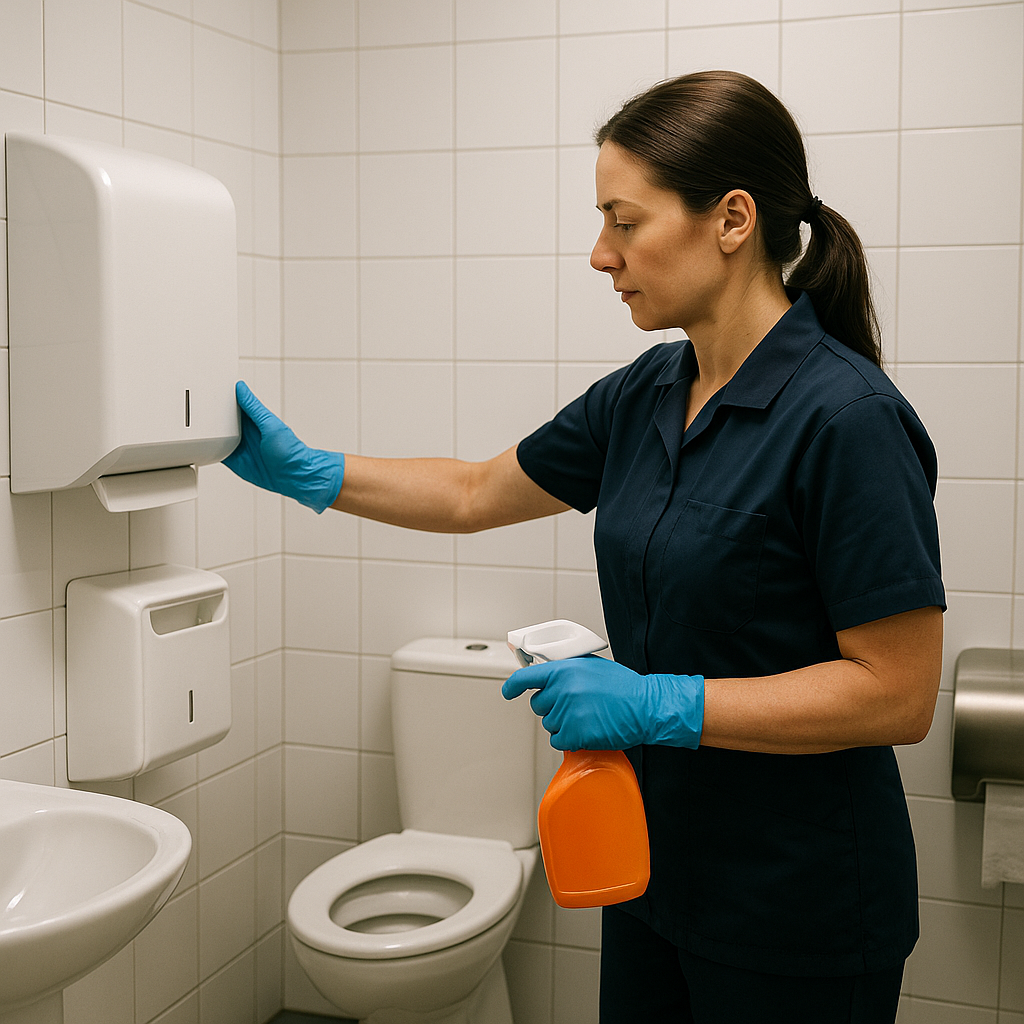
Washroom hygiene Glasgow is a critical aspect of maintaining healthy, compliant, and professional business environments. For commercial properties and organisations across Glasgow and the wider UK, ensuring effective washroom hygiene services supports operational continuity and regulatory compliance.
Understanding Washroom Hygiene Services in Glasgow
Washroom hygiene services encompass the cleaning, maintenance, and sanitary waste management of restrooms within commercial and public facilities. These services typically include restroom cleaning UK protocols, provision of sanitary disposal Glasgow solutions, replenishment of hygiene products, and waste disposal compliant with UK environmental and health standards.
Key Components of Washroom Hygiene Services
- Restroom cleaning: Regular and thorough cleaning in line with BICSc (British Institute of Cleaning Science) standards.
- Sanitary disposal: Safe and hygienic removal of sanitary waste in accordance with Duty of Care and Environmental Protection Act requirements.
- Product replenishment: Stocking essentials such as soap, hand towels, air fresheners, and sanitary bins.
- Compliance monitoring: Adherence to Health and Safety at Work Act 1974 and COSHH (Control of Substances Hazardous to Health) regulations.
These components collectively ensure a clean, safe, and pleasant washroom environment, reducing risks of contamination and improving user experience.
UK Industry and Compliance Landscape for Washroom Hygiene
Businesses in Glasgow must navigate a complex regulatory framework to maintain washroom hygiene:
- Health and Safety at Work Act 1974: Obligates employers to ensure workplace hygiene and safety.
- COSHH Regulations: Requires control of exposure to hazardous substances in cleaning agents.
- Workplace (Health, Safety & Welfare) Regulations: Mandate adequate cleanliness and sanitary facilities.
- Duty of Care (Waste Regulations): Enforces responsible disposal of sanitary waste.
Failure to comply can result in legal penalties, reputational damage, and operational disruptions.
Benefits of Effective Washroom Hygiene Glasgow
- Health and Safety Assurance: Minimises infection risks and supports employee wellbeing.
- Regulatory Compliance: Meets statutory obligations reducing liability.
- Enhanced Customer Perception: Clean facilities improve client and visitor confidence.
- Operational Efficiency: Prevents restroom-related complaints and downtime.
Use Cases by Industry
| Industry | Washroom Hygiene Focus | Key Considerations |
|---|---|---|
| Retail | High footfall, frequent cleaning | Efficient sanitary disposal Glasgow |
| Construction | On-site portable sanitation | Compliance with COSHH and waste disposal |
| Corporate | Employee wellbeing, product quality | Scheduled cleaning, hygiene services UK |
| Healthcare | Infection control critical | Enhanced sanitisation and waste protocols |
Operational Workflows and Challenges
Typical Workflow
- Assessment: Initial site survey and compliance audit.
- Cleaning Schedule: Daily or periodic cleaning aligned with foot traffic.
- Sanitary Waste Management: Installation and servicing of disposal units.
- Monitoring & Reporting: Use of technology for service tracking and compliance documentation.
Challenges
- Managing high usage areas without disruption.
- Ensuring staff training on COSHH and hygiene standards.
- Coordinating waste disposal under Duty of Care.
Mitigation Strategies
- Employing trained cleaning operatives certified by BICSc.
- Implementing digital checklists and reporting tools.
- Partnering with licensed waste carriers.
Importance for UK Businesses
Maintaining washroom hygiene Glasgow is vital to:
- Reduce health risks: Prevent outbreaks of infections.
- Ensure compliance: Avoid fines and legal issues.
- Maintain business continuity: Minimise operational interruptions.
- Control costs: Efficient maintenance reduces long-term expenses.
How to Choose the Right Washroom Hygiene Service Provider
When selecting a provider, consider:
- Certifications: Look for BICSc, ISO standards, and environmental accreditations.
- Experience: Proven track record in Glasgow and similar UK markets.
- Scalability: Ability to service multiple sites or high-demand locations.
- Technology: Use of smart monitoring and reporting systems.
Operational and Compliance Considerations
- Health & Safety: Ensure cleaning staff receive COSHH and Health & Safety at Work Act training.
- Staff Certifications: Verify operatives hold relevant qualifications.
- Data Protection: Secure handling of any customer or operational data.
- Environmental Responsibility: Compliance with Waste Regulations and minimising environmental impact.
Common Misconceptions
- “Cleaning alone is sufficient”: Proper hygiene also requires sanitary disposal and compliance.
- “All providers are the same”: Quality and compliance vary significantly.
- “Cost is the only factor”: Service reliability and regulatory adherence are equally important.
Frequently Asked Questions
What is washroom hygiene Glasgow?
Washroom hygiene Glasgow refers to the comprehensive cleaning and maintenance of washrooms in Glasgow, ensuring sanitary conditions and regulatory compliance.
Why is sanitary disposal important in Glasgow businesses?
Sanitary disposal prevents contamination and complies with UK waste regulations, maintaining hygiene and environmental standards.
How often should restroom cleaning be carried out?
Frequency depends on foot traffic but typically ranges from multiple times daily in high-use areas to weekly in low-use facilities.
What certifications should a hygiene service provider have?
Look for BICSc accreditation, ISO standards, and evidence of staff COSHH and Health & Safety training.
Are washroom hygiene services mandatory for UK businesses?
While not explicitly mandated, maintaining hygiene is a legal requirement under Health and Safety legislation.
How do hygiene services support operational continuity?
By preventing health risks and ensuring clean facilities, they reduce absenteeism and maintain business operations.
What are emerging trends in UK washroom hygiene?
Adoption of AI for cleaning schedules, integrated service models, and sustainability-focused products are leading trends.
Emerging Trends in UK Facilities & Security Industry
- Technology Adoption: AI and automation improve cleaning efficiency and monitoring.
- Integrated Service Models: Combining hygiene, security, and facilities management for streamlined operations.
- Sustainability & ESG: Focus on eco-friendly products and waste reduction.
Conclusion
Washroom hygiene Glasgow is an essential element for UK businesses aiming to maintain compliance, safeguard health, and ensure smooth operations. Understanding regulatory requirements, selecting qualified service providers, and adopting modern operational practices creates a robust hygiene framework. Through structured washroom hygiene services, organisations can protect employees, visitors, and their reputation while meeting stringent UK standards.